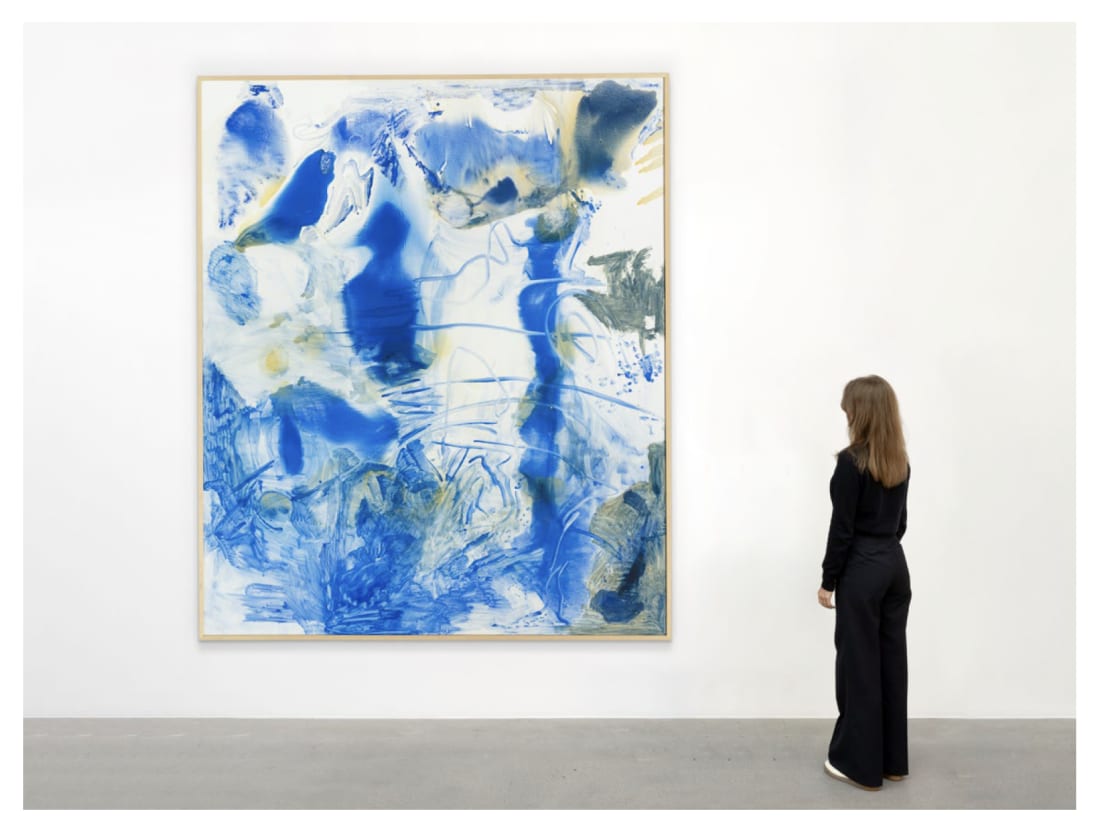


A fall fixture in New York since 1994, The Armory Show brings leading galleries together across art, sculpture, and performance. For 2026, María Elena Ortiz curates the Caribbean-focused Focus section, while Jovanna Venegas brings the region into Platform through monumental works, and Drew Sawyer leads the Curatorial Leadership Summit.
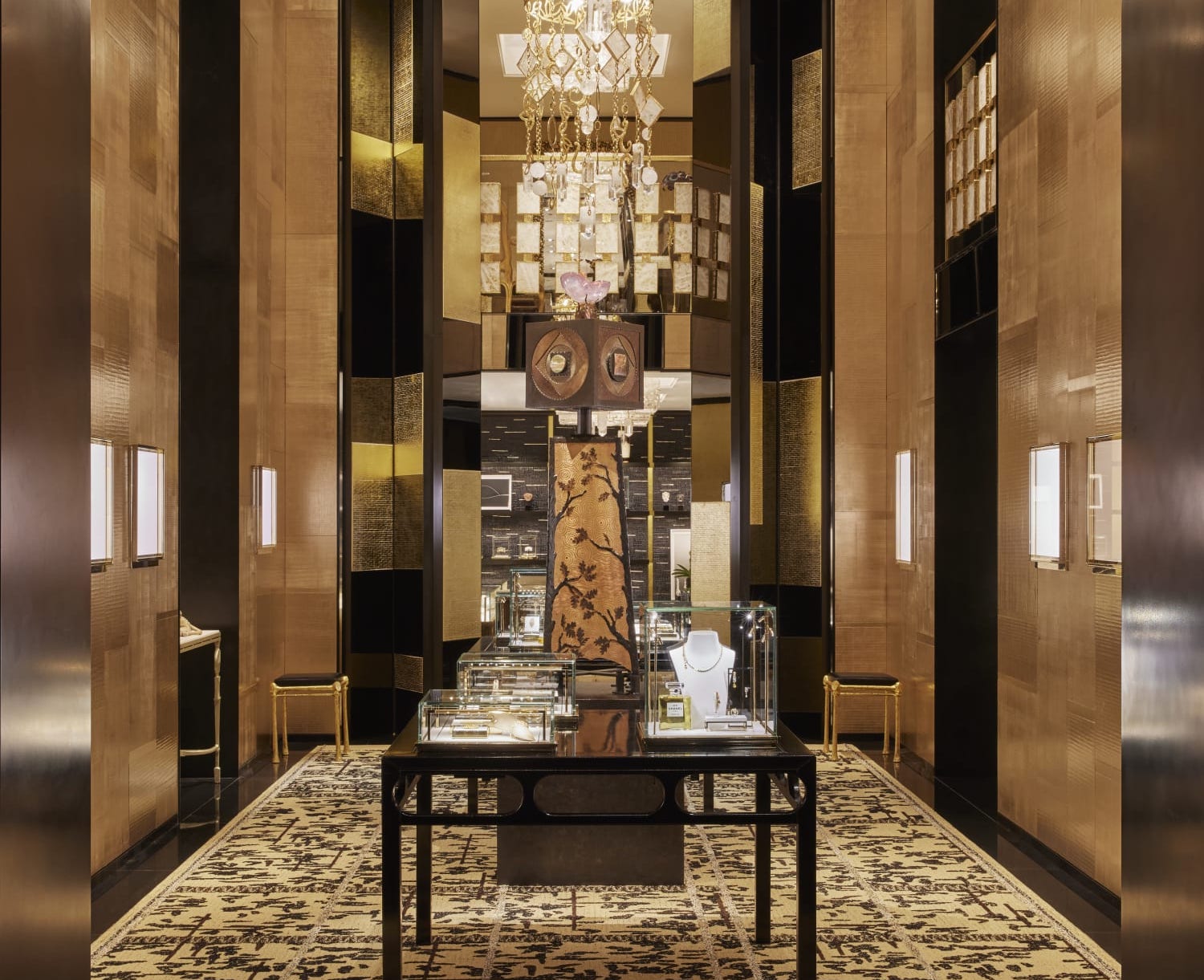
Inside the Javits Center, the industrial setting once again transforms into a packed art-world meeting place. Restaurants, cafés, and VIP spaces offer respite, including the Turkish Airlines co-sponsored VIP Café, where collectible B787-900 models nod to the airline’s presence.
Outside the booths, the week extends through smaller events, gallery openings, and tours leading up to and throughout the fair. Turkish Airlines also hosted private tours for guests looking for a more guided route through the seemingly endless presentations.
Whitewall walked the fair on its Thursday VIP preview. From emerging voices and U.S. debuts to ambitious solo presentations, these are the booths we wouldn’t miss at The Armory Show 2026.
History Has Two Sides at Carolina Nitsch Contemporary
 Kaloki Nyamai, “Tusukane,” 2023. Textured layers of acrylic paint, image transfer, rubber threads and collage on stitched canvas. 241 x 194 in. (612 x 492 cm). Co-presented with Galerie Barbara Thumm Armory Sculpture 2026. Installation view by Galerie Barbara Thumm, 2023.
 Kaloki Nyamai, “Tusukane,” 2023. Textured layers of acrylic paint, image transfer, rubber threads and collage on stitched canvas. 241 x 194 in. (612 x 492 cm). Co-presented with Galerie Barbara Thumm Armory Sculpture 2026. Installation view by Galerie Barbara Thumm, 2023.
One of the sculptures on view at The Armory Show 2026 comes from multidisciplinary artist Kaloki Nyamai, whose billowing installation expands his ongoing exploration of memory, material, and collective experience. Developing from a large-scale series presented at the Venice Biennale, the sculpture brings that conversation to New York. In the foreground, figures appear to care for one another, while behind them a more tumultuous scene unfolds—a crisis that asks viewers to move through a psychological charge shaped by identity and history.
Through acrylic, rubber paint, photo transfers, and stitched canvas, Nyamai blurs the boundaries between painting, sculpture, and installation, with each material carrying its own symbolic weight. The verso reveals the process: irregular stitched canvases, the contours of several figures, and some of the earliest marks made on the surface. Seen from the verso, the coherent image of the front falls apart, mirroring the fragility of society and the social contracts holding it together.
What we love: Rooted in Kenya and the traditions of Nyamai’s ancestors, the work transforms global tensions into something intimate and deeply felt, giving them a weight that extends beyond the surface.
Mennour Choreographs the Canvas
 Installation view of Mennour, Booth 106, The Armory Show, Javits Center, New York, September 24–27, 2026. © Dhewadi Hadjab, Adagp, Paris, 2026. Photo by Sebastiano Pellion Di Persano. Courtesy of the artist and Mennour, Paris.
Mennour’s solo presentation of Dhewadi Hadjab’s paintings coincides with the artist’s first solo presentation in North America. In his words, “I have always been an observer, driven by a curiosity to study the body.”
The series forms the third act of a larger ongoing theoretical performance. Following the previous two acts, an androgynous dancer moves freely yet with control, their face obscured in each pose. The realism and smooth brushstrokes—reminiscent of Caravaggio’s chiaroscuro and Jacques-Louis David’s drapery—are disrupted by blobs of paint across the top of the canvas. These marks break the illusion of the hyperreal, almost photographic image, echoing the folds of clothing and the body’s movement.
Nearly life-size, the figures are slightly unsettling in their proximity. Their scale allows the tension of the performance to escape the borders of the canvas, making any passersby feel present within its gray-walled setting.
What we love: The paint blobs began as an accident before growing into part of Hadjab’s choreography.
At Peter Blum Gallery, the Art Does the Talking
 Luisa Rabbia, “Untitled,” 2026, Oil on linen and resin, 82 x 44 ½ inches. Courtesy of the artist and Peter Blum Gallery.
 Erik Lindman, “[TBD],” 2026. Acrylic and collaged webbing on linen, 63 x 37 ⅜ inches. Courtesy of the artist and Peter Blum Gallery.
At Peter Blum Gallery, a considered selection brings together artworks by Alex Katz, Erik Lindman, Manuel Mathieu, Martha Tuttle, Rebecca Ward, John Zurier, and others, spanning painting, textiles, and mixed media. The booth also celebrates Marina Adams, who recently joined the gallery following her solo exhibition, “Works on Paper: A Survey.”
One highlight is Luisa Rabbia’s large-scale painting, “Untitled,” where two white hands, edged with red shadows, emerge from the bottom of the canvas as a sculptural, spine-like form rises upward. The canvas becomes a vessel connecting the human figures below with the gods above. Finger-made marks and branching lines, suggestive of veins, trees, or cells, give the work an organic quality. A feminine power of creation emerges, its energy dedicated to women today and the challenges they face.
The curatorial approach is rooted in connection: artworks remain distinctly their own while entering into dialogue with those around them, regardless of artist or medium.
What we love: The strength of the booth comes from the individuality of each artist’s practice, particularly their experimentation with form and material, while still allowing the artworks to speak to one another.
Spiralism, Layer by Layer at Perrotin
 Installation views of Perrotin’s booth #100 at The Armory Show, 2026. Photography by Guillaume Ziccarelli. Courtesy of the artist and Perrotin.
Returning to The Armory Show 2026 after a brief absence, Perrotin dedicates its booth to Kathia St. Hilaire, making for an unmissable return near the fair’s entrance. Her paintings appear almost like tapestries, informed by her Haitian ancestry and childhood in South Florida’s Afro-Caribbean neighborhoods.
The series, “Spiralism,“ takes its name from the Haitian literary movement founded in the 1960s amid François Duvalier’s dictatorship and led by figures including Frankétienne. St. Hilaire translates its ideas into densely worked canvases built from upwards of 50 layers of paint. Once cured, she carves, sands, and paints them again, creating crevices and marks that curve and undulate like hurricanes or rippling water—metaphors for intergenerational trauma and its persistence.
Despite their density, moments of smooth, blended paint and unobstructed faces interrupt the surfaces. Even the corners buckle inward under the accumulated layers, as though the canvases themselves are carrying some of that weight.
What we love: St. Hilaire’s ability to make “Spiralism” her own, translating its historical weight into a contemporary visual language across both intimate and monumental scales.
Rajiv Menon Contemporary Reframes the Canon
 Raghav Babbar, installation view of the artist’s paintings at The Armory Show 2026, Rajiv Menon Contemporary booth, 2026. Courtesy of the artist and Rajiv Menon Contemporary.
Gallerist Rajiv Menon is building a name for himself as a go-to voice for Indian and diasporic art in Los Angeles. For its 2026 Presents section, The Armory Show 2026 welcomes Raghav Babbar to U.S. audiences with “Sangam.” Babbar attended the Maha Kumbh in 2025, the Hindu pilgrimage in northern India that drew hundreds of millions of pilgrims. Meditating on faith and its democratizing force, he brings his signature psychological interiority to compositions sharing a similar vantage point across the riverbank, captured at different times of day.
“He uses a deep reverence for the European canon, and particularly tropes around light and devotion from Christian art, to think about his own experiences of faith in the context of India,” says Menon. “There’s a sense of hybridity to the painting.”
That cross-cultural exchange—drawing on references from Goya and the European canon while remaining rooted in contemporary India—also speaks to Menon’s larger mission. He sees recontextualization as a vehicle to give audiences the cultural framework to understand the work rather than presenting it in isolation.
What we love: The cross-cultural exchange, where Babbar rethinks the canon through a contemporary Indian lens.
Fridman Gallery Explores Psychology and Terrain
 Laurena Finéus, installation view of the artist’s paintings at The Armory Show 2026, Fridman Gallery booth, 2026. Courtesy of the artist and Fridman Gallery.
One of the booths curated by María Elena Ortiz for Caribbean Focus, Fridman Gallery brings together Laurena Finéus, Remy Jungerman, and Nate Lewis, three artists whose works explore landscape, movement, and the African diaspora through materiality. Jungerman’s sculptures and collages combine cotton textiles, kaolin clay, and wood, drawing from Surinamese and Maroon culture. Gridded compositions seek to impose order on the otherwise untamable natural forces of water, earth, air, and forest. Meanwhile, restrained color—from white to teal backgrounds—deliberately steps away from more vivid arrangements, creating a tension between control and the elemental.
Lewis’s hand-carved paper artworks meditate on dance and anatomy, as undulating curves create motion across the surface while precise hatching and pointillist marks introduce a deliberate counterforce. Read simultaneously as flat and dimensional, as though bodies are shifting in and out of the paper. That physical movement connects with broader histories of the African diaspora’s turmoil and healing. Finéus layers oil, ink, pigment, and acrylic into landscapes inspired by the seasonal rains and flooding that affect Maroon terrain. Neither literal nor fantastical, they capture landscapes in flux, rewarding both the macro and micro views as details emerge and blend together.
What we love: Jungerman’s Flying Geese extends the booth onto the Platform, translating his practice into a compelling new format.
At Nino Mier, Take a Seat
 Installation views of Nino Mier Gallery’s booth at The Armory Show, 2026. Courtesy of the artist and Nino Mier Gallery.
Returning to The Armory Show 2026, Nino Mier Gallery offers a bit of déjà vu for anyone who visited last year’s fair. Following its 2025 collaboration with designer Benjamin Vandiver, the gallery once again trades the standard white-box booth for a domestic setting, this time surrounding Alexandria Tarver’s paintings with rare European furniture sourced directly from founder Nino Mier’s collection.
The solo presentation coincides with “Dedicated to the Low in Heart,” Tarver’s debut solo exhibition with the gallery. Her practice traces a search for solace shaped by a Houston upbringing marked by experiences of poverty and mental illness. After moving to New York, she found refuge in Modernism and music subcultures, influences that feed into evocative paintings and artworks on paper where material, gesture, and accumulated painterly marks carry the emotional weight.
What we love: The booth itself. Carpeting, seating, and furniture from Mier’s own collection create an intimacy that feels less orchestrated than lived-in—and offers a welcome respite from the fair’s white walls (and, most importantly, somewhere to rest tired feet). That domestic setting gives Tarver’s deeply personal paintings room to feel even more at home.
Marian Goodman, Right on Cue
 Tavares Strachan, Installation view, “Special Blue: Act I,” The Armory Show, New York, 2026. Courtesy of the artist and Marian Goodman Gallery. Photo by Alex Yudzon.
Visitors who entered the fair at just the right moment found a crowd gathered at Marian Goodman Gallery for Tavares Strachan’s “Special Blue: Act I.” Staged September 24–25 in a series of eight-to-ten-minute performances every two hours, the work draws on Strachan’s childhood in The Bahamas and considers the Caribbean as a whole, as the vacation transitory nature and those who live there season after season.
As a self-playing piano sounds in the background, two performers move and speak, leaving the gathered crowd unaware of what comes next. Against dark blue walls hung with Strachan’s multimedia works, the performance brings the breadth of their practice into focus while embodying the fair’s wider Caribbean and diasporic themes. Passersby stop, bewildered and curious; others return after realizing they missed the performance entirely.
What we love: The element of chance. Catching “Special Blue: Act I” transforms a booth into something fleeting and alive, rewarding those lucky to arrive at precisely the right moment.