




Ask a museum registrar, the person who keeps the record of a collection, what an artwork is, and the answer will not stop at the object. It will take in the crate and the condition report, the exhibition history, the conservator’s notes, the letter from the artist explaining why the second version is bluer than the first. The object is the part you can stand in front of. The rest is what allows it to travel, to be lent, to be insured, to be understood in fifty years by someone who never met the person who made it.
Artists have always known this, and have rarely been rewarded for it. Studio notes stay in the studio. The reasoning behind a change of direction, or behind a work abandoned halfway, lives in a conversation nobody wrote down. A practice builds a private archive, and its value usually becomes clear only once it is too late to assemble it. The .ART Award 2026, launched this year to mark the tenth anniversary of the .ART domain name, is built around a simple reversal: it asks for that record while the work is still being made, rather than as an archive put together after the fact.
An Application That Looks Like a Practice


 A salon at Château du Fresne, the artist residency near Paris that hosts one of the nine .ART Award 2026 prizes. Courtesy of Château du Fresne.
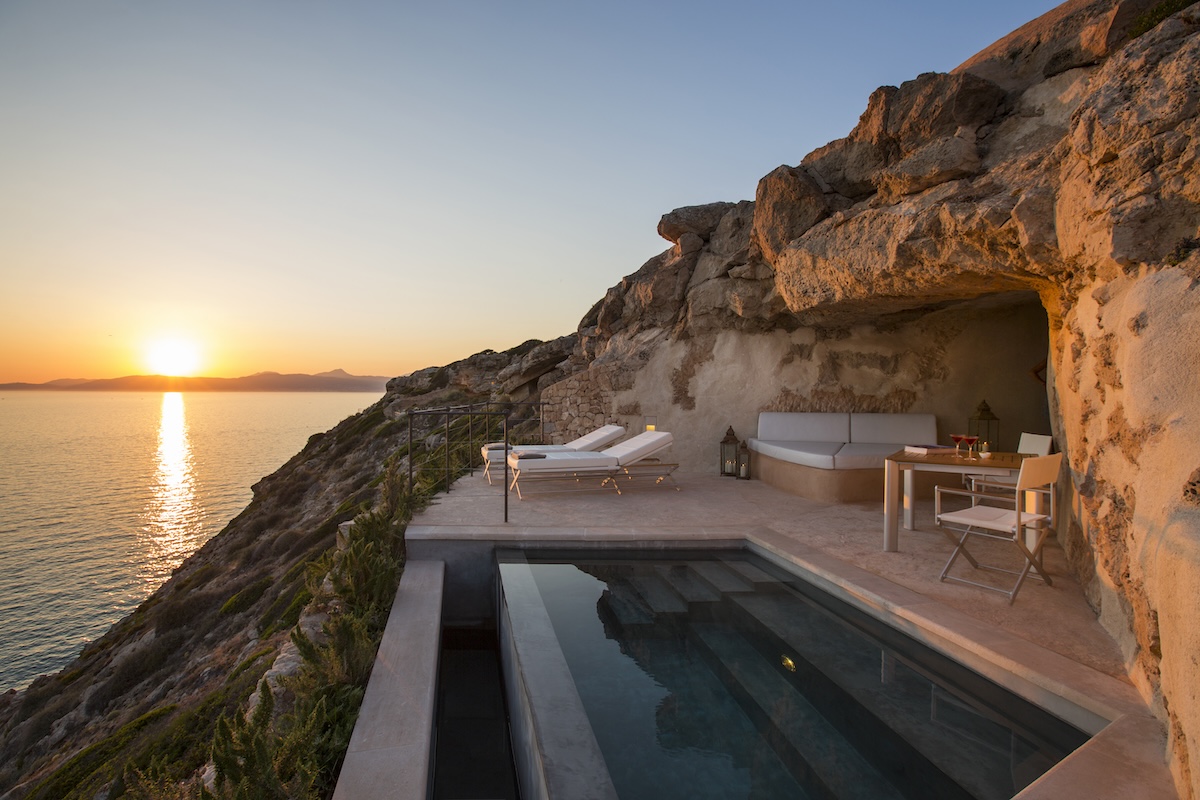
 The artist Claudia Pons Bohman at Anfitrión in Marbella, where one .ART Award 2026 winner will take up a residency. Courtesy of Anfitrión.
An artist enters by submitting a single .ART domain, pointing to wherever their practice already lives online. What the jury expects to find there is the work itself, a biography, captions carrying the technical detail, and the part most sites leave out: the story behind the work, how it came to be, what it is made from, what changed along the way, and the context it grows out of. Around two hundred words will do it, or a minute of the artist speaking on camera.
The effect is to move the centre of gravity of an application. A portfolio shows the result of a decision, while documentation of the narrative behind the making shows the decision itself. Once a certain level of craft is taken for granted, it is the decision that separates one artist from another. It is that story that gives a work its context and creates interest, emotional connection and, ultimately, value.
What the Archive Is For
 The Ria Keburia Foundation in Georgia, where the winner of the .ART Award residency will spend a month. Courtesy of the Ria Keburia Foundation.
The argument for keeping a record is usually made in the language of institutions: provenance, attribution, due diligence. It is also, more quietly, an argument about scholarship and company. An archive that is legible from outside allows a practice to be traced, compared with others working on the same problem, and picked up by a curator or a writer who would otherwise never have found it.
Among the .ART Award’s jurors, the artist and poet Sasha Stiles describes her own archive as something closer to a living document than a record. Her training data, the corpus of her writing that feeds her generative work, exists in one form for a project made in 2020 and another for the project in front of her now.
“Having different timestamps of what that looks like at different moments in my life is interesting for me. It’s like going back and looking at a diary.”
—Sasha Stiles, Artist and Poet, .ART Award 2026 Juror
The Jury & What They’re Looking For
 Sasha Stiles, “Are you ready for the future?,” 2023. Sasha Stiles is a juror of the .ART Award 2026. Courtesy of Sineglossa.
Entries are read by a jury drawn from across the field: Irina Tarsis of the Center for Art Law, Regina Harsanyi, Media Arts Curator at the Museum of the Moving Image, Akanksha Ballaney, Senior Director of Business Development at Artsy and Artnet, Dean Phelus of the American Alliance of Museums, Shlomi Rabi, founder of Bridgewell Arts, Leo Crane of AIFA Ventures and the OmenaArt Foundation, the curator and residency co-founder Gijs Stork, Whitewall’s own Laurent Moïsi, and Sasha Stiles.
Each entry is scored on three things: the strength of the work, how well the narrative behind its making is documented, and the practice taken as a whole. The second is the one applicants most often underestimate, and the one the jury notices first.
“Having been an early user of the .ART domain through Whitewall, I have always believed in the importance of creating a digital space that genuinely reflects the identity and specificity of the art world,” said Whitewall‘s Laurent Moïsi. “What draws me to the .ART Award is what it asks of artists: the work, the process behind it, and the record of how it came to be. That is the material an editor rarely receives and always wants. It is a privilege to join the .ART Award jury and to discover the artists who are thinking about their practice this way.”
Nine Prizes, and Where They Lead
 Sasha Stiles, Basel Social Club, 2023. Courtesy of Play Record Mint.
The .ART Award carries more than $50,000 in total prize value, and it has grown since it opened. Alongside a $15,000 cash grand prize sit three artist residencies: Château du Fresne in France, Anfitrion in Marbella, Spain, and the Ria Keburia Foundation in Georgia.
Four partners joined this autumn, and between them they describe the range of places a work can now live.Disiva, which has been putting contemporary art on large-scale public screens since 2021, will give one artist a ten-second slot in continuous rotation in a public digital exhibition in Times Square in May 2027.Art on Tezos brings 5,000 tez and a spotlight from the chain that has become a home for code-based work.illust., whose tools anchor digital works to real-world coordinates, awards $3,000 to an artist making in augmented reality. The remaining prizes are a feature in this magazine and a premium .ART domain valued at $10,000.
An artist submits once and is considered for every prize that fits. A painter in Lagos and a generative artist in Seoul enter by the same route.
Process, Context and Value
 Sasha Stiles, “A Blank Garden,” NFT Paris, 2025. Courtesy of the artist.
“The process of creating the work and its context are what create the value of the work, including the way the artist themselves evaluates it. The main prize is not money, but the act of an artist organizing and articulating their own context. In that sense, every participant will receive the main prize.”
—Ulvi Kasimov, Founder of .ART
It is a claim worth testing against the work it asks for. Setting down why a body of work exists, in plain language, on an address that belongs to the artist, is the kind of task that clarifies a practice whatever a jury decides. Nine artists will be told they have won something in December. The rest will have written the first draft of their own archive.
The .ART Award 2026 is free to enter and open to artists worldwide in every discipline. Applications close on 1 November 2026. Applications close 1 November 2026, and winners are announced at BitBasel on 4 December during Miami Art Week.
Find out more HERE.

