

On a misty morning at Slane Castle in Ireland, pale light flickered across carved mouldings and gilt frames, glancing off an “Après Van Dyck” portrait of a lady in the reading room. The painting has been deliberately kept in dialogue with the contemporary pieces introduced by curators Jenn Ellis and Matilda Liu, who sought not to displace history but to let it speak anew. Beyond the intimacy of that room, Irish artist Laura Gannon’s new work, The Little Virtues, unfurls in the castle’s former library, now its ballroom — a circular chamber of deep red walls and a soaring neo-Gothic ceiling, where shifting Irish light continually reanimates the creased and folded linen surface, setting it in resonance not only with the architecture but also with the other works assembled for CAIM.
Perched above the Boyne Valley in Ireland, Slane Castle is a site where history, resilience, and reinvention converge. Scarred by fire in 1991, it has since transformed into a stage for cultural rebirth — from legendary concerts that brought Queen and The Rolling Stones to its grounds, to its newest role as home to CAIM, an art programme whose name, drawn from the Gaelic for “sanctuary,” evokes ritual and protection. Bringing together nineteen Irish and international artists, CAIM is conceived as a space of shelter, preservation, and renewal — its inaugural edition runs from 11 September to 30 September 2025, and it is planned as an ongoing annual event. “I was struck by Slane Castle’s embeddedness in nature and its setting within the Boyne Valley,” says Jenn Ellis.
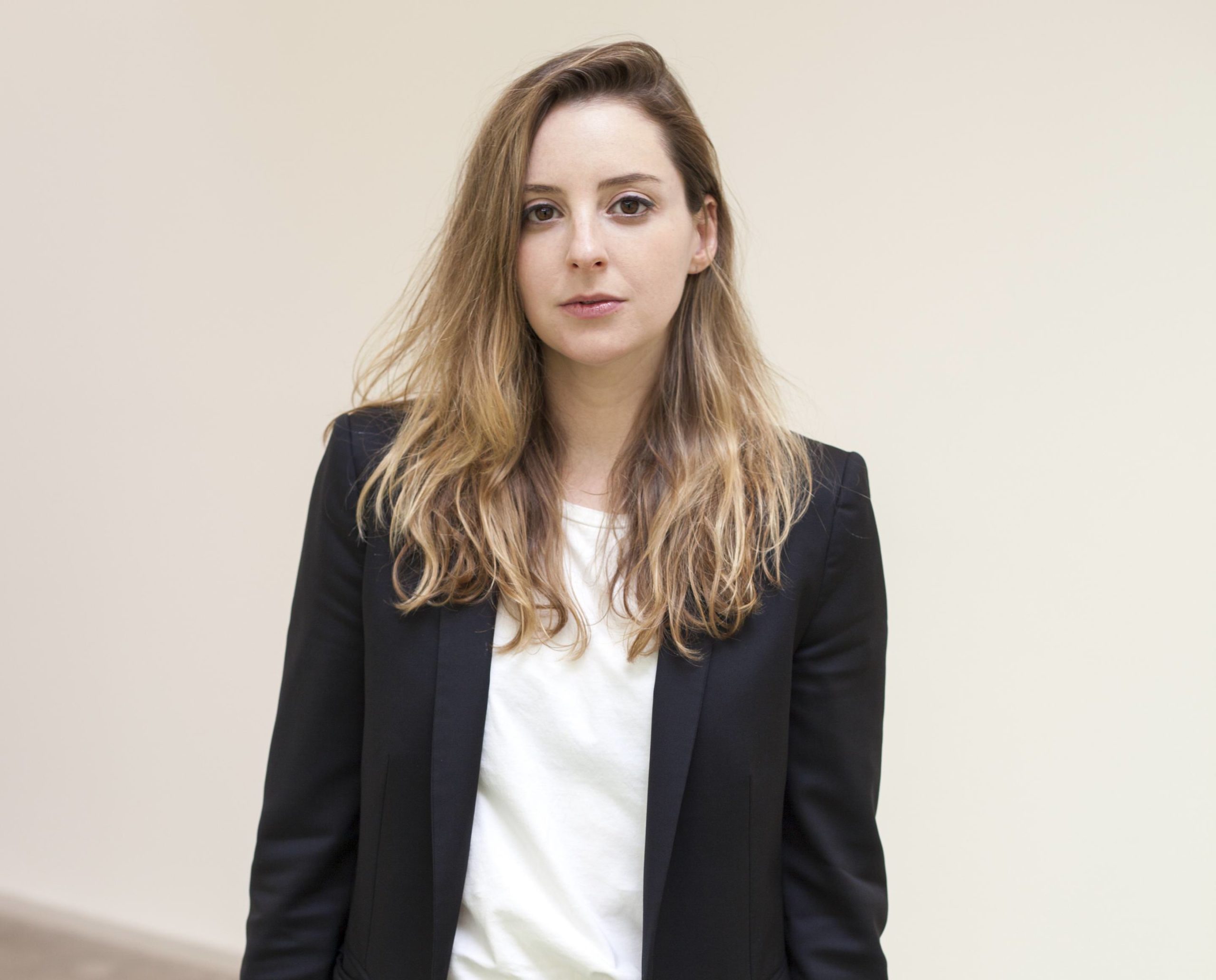
 Laura Gannon. Courtesy of Laura Gannon and John Dolan.
“It wasn’t only the greenery — it was also the softness of the river, the ruffling of leaves, this atmosphere of protection.” Matilda Liu remarks: “Almost all of the artists we spoke with wanted a place that could permanently display and care for artworks. That feedback wove directly into CAIM’s vision: nurturing artists, sharing art with the public, grounding it in nature.” For Alex Conyngham, 9th Marquess of Conyngham, the programme continues a family ethos of custodianship and hospitality: “Slane has always been about bridging worlds. Once known above all for music, it is now extending that spirit into contemporary art.”
It is within this layered atmosphere — where sanctuary, legacy, and renewal converge — that Gannon’s The Little Virtues finds its resonance. Positioned beside a window, the work draws life from shifting light, its creased linen surface alive to each shift of shadow and colour. In these folds and volumes, fragility meets strength, intimacy opens into presence, and the body is invited to pause — an act Gannon sees as central to sanctuary. Amid this atmosphere of light and renewal, Whitewall met the artist to discuss her practice, her journey, and the ways her work draws on time, ritual, and materiality.
Laura Gannon Reflects on Her Artistic Journey
 Making The Little Virtues. Courtesy of Laura Gannon. Photo by Marco Godoy.
WHITEWALL: Your new work The Little Virtues makes its debut here in Slane Castle within an exhibition that takes its name from the Gaelic word for sanctuary. How did you approach showing this work in a space so charged with history, ritual, and architecture?
LAURA GANNON: The approach came from my conversation with Jenn. She understands how I make my work. I sent her a shortlist of pieces — she had also seen some in the studio — and together we chose this one because of its depth of form and its ability to connect to the architecture of the space. Positioned beside the window, the work is activated by the changing light and colour. When light activates the work, it fulfills one of its core intentions.
In terms of the exhibition theme, CAIM: I grew up in the west of Ireland and spoke Irish from the age of four, so I’m embedded in how Irish is not just a language but a cultural way of life — relating to nature, to seasons, to life and death. There’s something very ancient in the language and the culture. My rural background of empty landscapes, stone walls, and a strong storytelling tradition made this a sympathetic title and theme to engage with.
“When light activates the work, it fulfills one of its core intentions.”
-Laura Gannon
WW: How did your artistic journey emerge, and how has it evolved? You’ve worked with film, with linen, with materiality in space and architecture, and very much with light. How did these elements come together across such different installations?
LG: My background in the west of Ireland shaped me early. The landscape was full of political and historical architecture — empty famine houses, burnt-out Anglo-Irish houses, Civil War ruins, workhouses. There was a strong sense of absence. I didn’t know all the contexts as a child, but they were there. Intergenerational emigration left many empty properties. That sense of ruin and absence has stayed with me.
The west of Ireland’s light has been a constant influence. My use of silver, and the way my work is activated by light, come directly from it.
At eighteen, I studied in Belfast. Later I spent six months in California in the mid-1990s, near Silicon Valley, just as the world was changing. That experience has stayed with me. I was also part of one of the first residencies at the Irish Museum of Modern Art. In my early twenties, I was at the beginnings of new systems and concepts, which shaped my thinking.
In 2002, I moved to London to study at Goldsmiths, and I’ve stayed since. Over time I shifted from film and drawing to linen. Linen came forward when I realised I’m a maker — it gave me permission to make every day.
Film has a different rhythm. I might work on one for years, while I make linen pieces daily. These two rhythms complement each other. The materiality of film — its light, its gaps, its sprocket cutouts — feeds directly into my linen work.
In London, I’ve had the support of a peer group — Francis Upritchard, Fiona Banner, Peter Liversidge — artists I continue to exchange with. That ongoing dialogue sustains my practice.
Rituals in Life and Practice
 Courtesy of James Retief and CAIM.
 Courtesy of James Retief and CAIM.
WW: Linen in your hands is never just a surface — it folds, resists, and opens into shadow and volume. What is it about this material that continues to hold you? And how does it speak to sanctuary in this space?
LG: I’ve chosen a few materials to work with, and by reworking the same ones over time, I’ve become fluent in them. This is artist’s linen with a very fine surface — normally used for portrait painting. I’ve worked with this Italian linen for ten years. Because I know its materiality so well, I can keep pushing what it can do.
It’s like returning to a trusted brand of oil paints — over time you build up a knowledge of where you can push them. Because this linen is tightly woven — more like canvas than fabric — when I paint layers of paint, it holds its shape. That allows me to bring volume and a sculptural quality into the work.
The connection to sanctuary comes through the body. My works can be read by the body as much as the eyes. The scale invites a physical response — a pause. And in sanctuary, pausing and being replenished is essential.
“I believe hands have intelligence, not just the brain.”
-Laura Gannon
WW: You never begin with a sketch, and your works unfold slowly over time. How does this sense of duration — of waiting for the work to find its language — connect to ideas of ritual, patience, and protection explored in CAIM?
LG: As humans, we are always in time and space. My work reflects that — it’s activated through the process of making, through thinking-by-making. I believe hands have intelligence, not just the brain.
Ritual is inherent to the human condition. Religion has often occupied that space, but secular life is full of it too: birthdays, celebrations, mourning. In my Irish background, ritual around death and burial was central to the community.
In the studio, ritual comes through repetition: working with linen, acrylic, oil, ink, silver, and layering colours beneath — pinks, blues, yellows. There’s also ritual in daily making, and in accepting that a work doesn’t always resolve when you want it to. That’s where patience comes in.
The core of being an artist is commitment: staying close to your own language, giving it time, and learning how to share it so others can bring their own meaning. It unfolds over time; it doesn’t arrive fully formed.
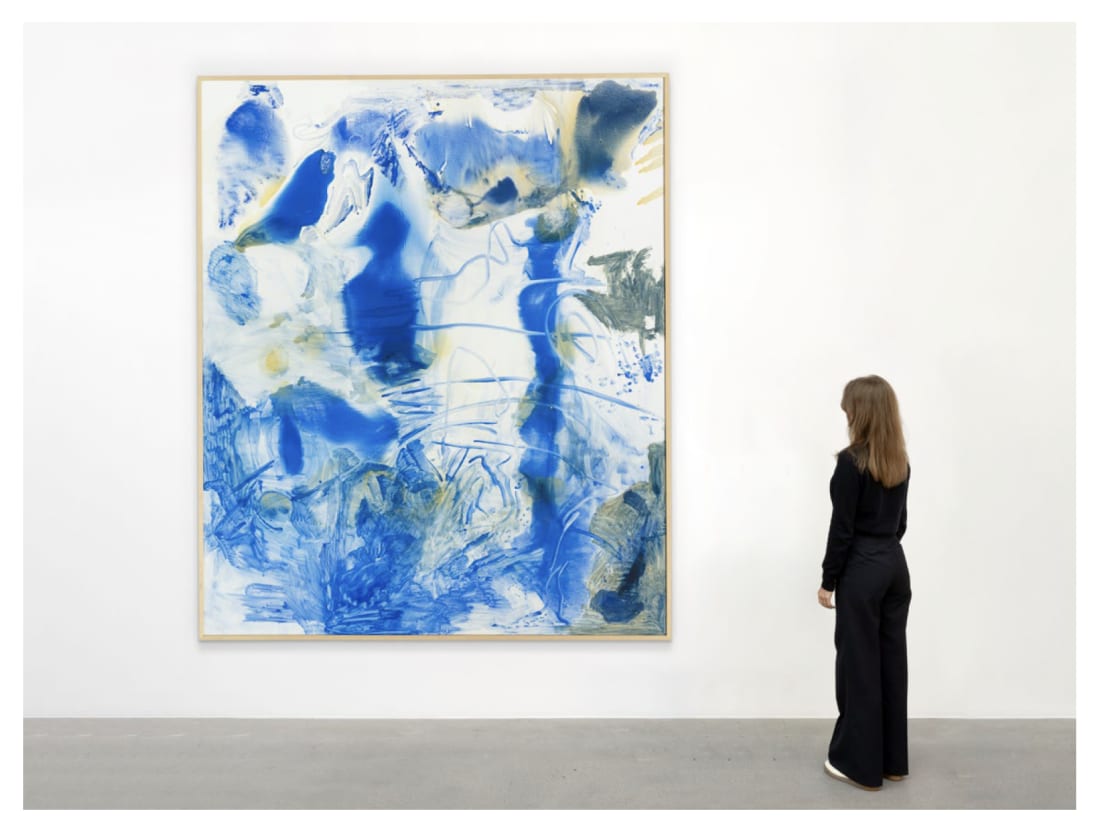
 Courtesy of Laura Gannon and Kate MacGarry. Photo by Ben Westoby/Fine Art Documentation.
WW: The cutouts in your work feel at once architectural and cinematic — almost like sprockets in a strip of film. Could you speak about how notions of rhythm, light, and temporality thread through this work?
LG: My work shares a commonality with cinema: it’s activated by light. Passing film through sprockets unfolds and reveals it — light makes it visible.
With silver and layered colour, light becomes an active agent. The work never has a fixed colour; it allows constant rereading. Especially in Ireland, with its shifting skies, the light continually transforms the work. I think my choice of silver finishes comes from growing up in the west of Ireland, surrounded by stone, grey skies, and full skies of changing light. I’ve internalised that environment and abstracted it in my work.
WW: The title The Little Virtues suggests intimacy, modesty, even fragility — yet the work commands presence. How do you see the relationship between these virtues and the strength of the piece?
LG: The title comes from an essay by Natalia Ginzburg. She distinguishes between “little virtues” — being tidy, calm, not disturbing others — and “big virtues,” like generosity, courage, education, moving yourself forward. She argues the big virtues are more important.
So the title is a slight misnomer. Often, I take titles from short stories and essays by women. They’re not literal references; they are companions to me while I’m making. They mark time — what I was reading during the making of a work.
In Dialogue with Slane Castle
 Courtesy of CAIM.
WW: As an Irish artist returning to show within the landscape and symbolism of Slane, does this context inflect the work differently than when you show abroad?
LG: Yes. It connects the work more closely to where my ideas were originally formed. Talking about light and landscape here feels especially resonant. And showing alongside Irish as well as international artists is rare for me — usually it’s only in international contexts. So this is a welcome dialogue.
WW: What would you like the audience to take away from your work here at Slane Castle?
LG: I hope they pause. That’s the most important thing. To pause and experience the language of the work — its materiality, its relationship to the architecture and light. To give themselves space to encounter colour, form, and volume.
 Courtesy of James Retief and CAIM.