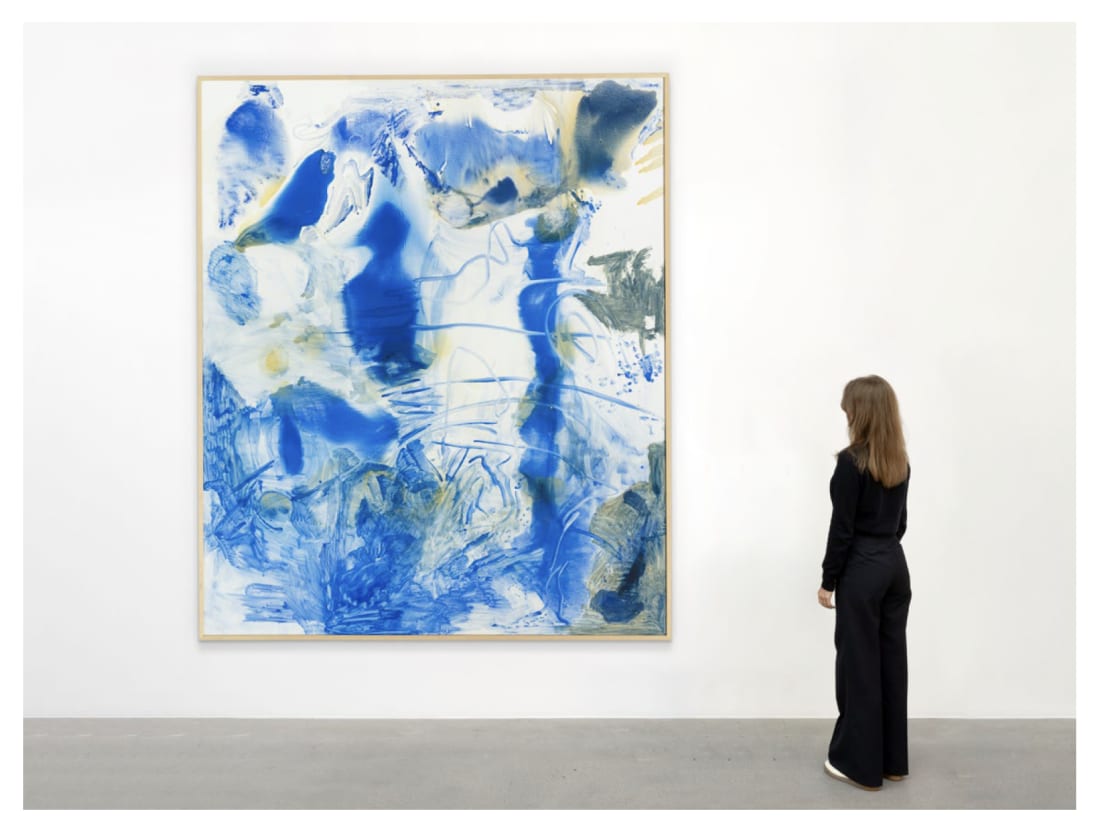

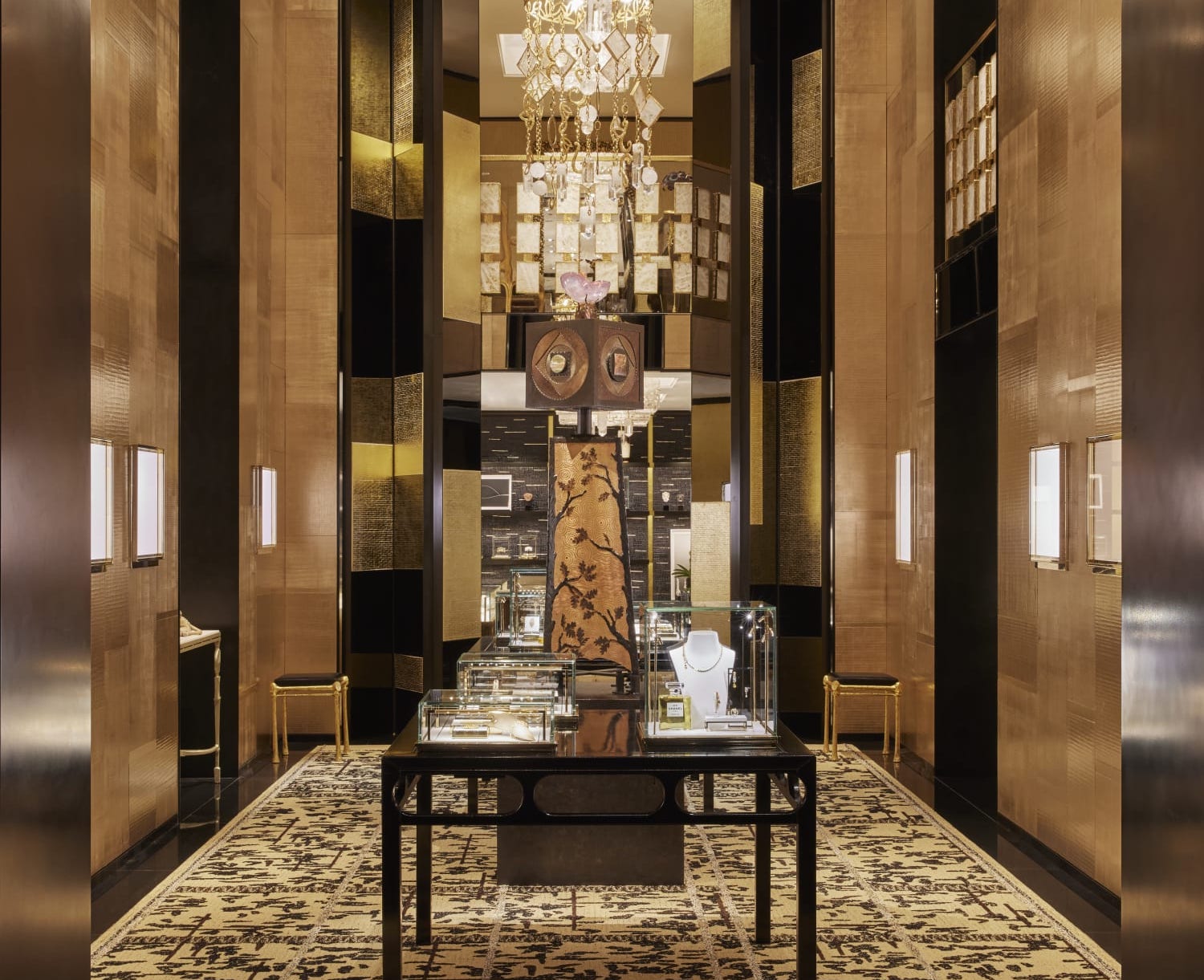


At Galleria Continua Paris Matignon, Hank Willis Thomas returns to Paris after nearly twenty years with “Afterimage,” an exhibition that turns looking into an act of reconsideration. Across photography, sculpture and his distinctive retroreflective works, the artist asks what remains in an image, and what changes when we look again.
Returning to Paris
 Courtesy of the artist & GALLERIA CONTINUA.
 HANK WILLIS THOMAS,
“The Toiler and Circe,”
2024,
UV and silkscreen print on retroreflective vinyl, mounted on Dibond,
105.2 x 79.7 x 5.8 cm, © Hafid Lhachmi, ADAGP Paris 2026. Courtesy of Hank Willis Thomas Studio & GALLERIA CONTINUA.
An image can tell us a great deal about the moment in which it was made. But it can also tell us something about the moment in which we are looking at it.
This is perhaps where Hank Willis Thomas begins.
At Galleria Continua’s Paris Matignon, “Afterimage” marks the artist’s return to Paris after almost two decades, and the beginning of his collaboration with the gallery. Yet there is little sense of a return in the conventional sense. Thomas does not look backward so much as he looks at how the past continues to move beneath the surface of the present.
His works have always occupied that space between image and memory, between what we think we recognize and what we have been taught to see. Photography, advertising, popular culture, sculpture, archival material: Thomas brings these languages together not to resolve them, but to make their contradictions visible.
The Afterimage
 Hank Willis Thomas, “Afterimage,” exhibition views, Galleria CONTINUA, Paris Matignon, © Hafid Lhachmi, ADAGP Paris 2026. Courtesy of Hank Willis Thomas Studio & GALLERIA CONTINUA.
The title “Afterimage” is telling. An afterimage is what remains once the original image has disappeared. It is not quite memory, not quite vision. It is a trace that persists, sometimes more insistently than the image itself.
In Thomas’s recent retroreflective works, this idea becomes almost literal.
Seen under ordinary light, the works present one image. When illuminated by a flash, another appears. Archival photographs emerge; fragments of demonstrations, marches and historical events become visible. The work seems to change in front of us, although, of course, it is our position that has changed.
Thomas has described his practice in terms of framing and context: where we stand determines, in part, what we see—and therefore what we understand as truth or reality. It is a deceptively simple idea, and one that feels increasingly relevant in a culture in which images arrive faster than we can interpret them.
Reframing the Archive
 Hank Willis Thomas, artwork, Galleria CONTINUA, Paris Matignon, © Hafid Lhachmi, ADAGP Paris 2026. Courtesy of Hank Willis Thomas Studio & GALLERIA CONTINUA.
There is something distinctly contemporary about this insistence on perspective, but Thomas’s concerns are rooted in a much longer history of representation.
In Woman in the Red Dress (After Keïta), he returns to Seydou Keïta’s celebrated portrait The Odalisque, photographed in Bamako in 1957. Keïta’s portraits were already acts of self-definition: at the threshold of Mali’s independence, they offered images of African identity and individuality that existed outside the stereotypes imposed by colonial representation.
Thomas takes that photograph and places it within a wider constellation of archival images. The singular portrait becomes part of a collective history. The individual becomes inseparable from the social and political forces around him.
This is one of the quiet strengths of Thomas’s work. He does not simply appropriate historical images; he makes us reconsider the conditions under which those images acquired meaning in the first place.
The same movement occurs in The Toiler and Circe, where references to Aaron Douglas and Romare Bearden meet archival photographs of civil rights demonstrations. The historical, the mythological and the photographic occupy the same field.
Here again, Thomas is interested in transformation. Circe, the figure from Homer’s Odyssey associated with metamorphosis, becomes an unexpected companion to images of protest and resistance. The retroreflective surface adds another transformation of its own: the photograph breaks apart, recombines, and appears differently according to the light.
History, Thomas seems to suggest, behaves in much the same way.
We like to imagine history as something settled a sequence of events that has already happened and therefore cannot change. But our understanding of history is continually being rewritten. New images emerge. Old images are reconsidered. Voices once excluded from the narrative become impossible to ignore.
The archive is never entirely neutral.
Monuments to Connection
 HANK WILLIS THOMAS,
Community (Rainbow),
2026,
bronze,
81 x 84 x 17 cm, Photograph: © Hafid Lhachmi, ADAGP Paris 2026. Courtesy of Hank Willis Thomas Studio & GALLERIA CONTINUA.
 HANK WILLIS THOMAS,
Community (Rainbow),
2026,
bronze,
81 x 84 x 17 cm, Photograph: © Hafid Lhachmi, ADAGP Paris 2026. Courtesy of Hank Willis Thomas Studio & GALLERIA CONTINUA.
That idea also gives particular resonance to Thomas’s sculptures. Over the years, he has returned to some of the most universal gestures in human life: an embrace, a handshake, a raised fist, two hands reaching toward one another. By translating these gestures into marble and bronze, he gives them the weight and permanence of monuments.
But these are monuments to something different.
They are not necessarily monuments to individuals or victories. They are monuments to connection.
In Community, a circle of hands grips wrist to wrist, creating a continuous structure whose physical form expresses interdependence. The rainbow patina adds another dimension, suggesting plurality and the complexity of identity.
It is a remarkably direct image. And yet, like so much of Thomas’s work, it becomes more complicated the longer one looks.
The same can be said of Everything we see hides another thing, whose two veiled figures recall René Magritte’s The Lovers. Here, the familiar gesture of intimacy becomes something less certain. Faces disappear. Identity becomes deliberately ambiguous. What might initially appear to be an image of closeness becomes a question about the categories through which we habitually read bodies, relationships and identity.
Thomas is interested in that moment when recognition begins to fail. Because perhaps that is where looking really begins.
Looking in an Age of Images
 HANK WILLIS THOMAS, “The dawn of my return,”
2026,
embroidered felt,
200 x 140 cm, Photograph: © Hafid Lhachmi, ADAGP Paris 2026. Courtesy of Hank Willis Thomas Studio & GALLERIA CONTINUA.
His practice is particularly compelling today because we live in an age in which images have become both omnipresent and increasingly difficult to trust. We photograph everything. We document everything. We share everything. And yet the abundance of images has not necessarily brought us closer to a shared understanding of reality.
If anything, it has made the question of perspective more urgent. Thomas does not propose that art should tell us what to think. Instead, his work creates the conditions in which we might pause before deciding what we see.
That distinction matters.
From Paris to Italy
 Hank Willis Thomas & Man Ray, “Tomorrow I shall contradict myself,” exhibition view Galleria
Continua / San Gimignano, Courtesy: the artist and GALLERIA CONTINUA, Photographer: Ela
Bialkowska, OKNO Studio.
It is also what makes the continuation of “Afterimage” in Italy so significant. At Galleria Continua’s San Gimignano and Rome spaces, Thomas enters into a dialogue with Man Ray in “Tomorrow I Shall Contradict Myself.”
The pairing initially seems separated by time, but the connection is surprisingly natural.
Man Ray understood early that photography did not have to be a passive record of reality. Through solarization, rayographs and other experiments, he turned the photographic process itself into a space for invention. Thomas takes that questioning of the image into another era, one in which the stakes of representation extend into identity, race, history and collective memory.
Thomas has spoken of encountering Man Ray’s work as a student and of being drawn to his willingness to push against the limits of the photographic frame. The Italian exhibition makes that lineage visible, bringing Man Ray’s experiments into conversation with Thomas’s sculptures and retroreflective works.
There is something fitting about this conversation taking place across Galleria Continua’s Italian spaces. The gallery itself has always resisted a single definition of what a contemporary gallery can be, its history moving between San Gimignano, Paris, Rome and its other international spaces, between generations of artists and very different artistic languages.
Thomas’s work responds naturally to that kind of geography.
In Paris, “Afterimage” asks us to look again at the images that have shaped our understanding of history. In Italy, the dialogue with Man Ray asks us to look again at the history of looking itself.
The two exhibitions become, in that sense, part of the same proposition. An image is never only an image. It carries the circumstances of its making, the assumptions of its time, the person who created it, the person who is represented, and the person standing in front of it decades later. It carries what we remember, and what we have forgotten. And sometimes, as Thomas reminds us, it carries another image beneath the first. We simply need to change the light. Or perhaps, more importantly, our position.
“Afterimage” is on view at Galleria Continua / Paris Matignon through November 28, 2026. “Hank Willis Thomas & Man Ray: Tomorrow I Shall Contradict Myself” continues at Galleria Continua in San Gimignano through January 31, 2027, and at the gallery’s Rome presentation through December 31, 2026.
 Hank Willis Thomas, “Afterimage,” exhibition views, Galleria CONTINUA, Paris Matignon, © Hafid Lhachmi, ADAGP Paris 2026. Courtesy of Hank Willis Thomas Studio & GALLERIA CONTINUA.