


At Drouot, Paris’s historic auction house, curator Judith Touitou is bringing together more than 100 works spanning photography, sculpture, decorative arts, jewelry, and more for “Œuvres Choisies.” The exhibition draws from selections proposed by auctioneers ahead of their upcoming sales, pairing objects that might otherwise never share the same room. From a Helmut Newton photograph taken on a Monte-Carlo diving tower to a wooden owl by François Pompon and rare porcelain once associated with Marie-Antoinette, the presentation moves freely between the intimate and the exceptional, the familiar and the unexpected.
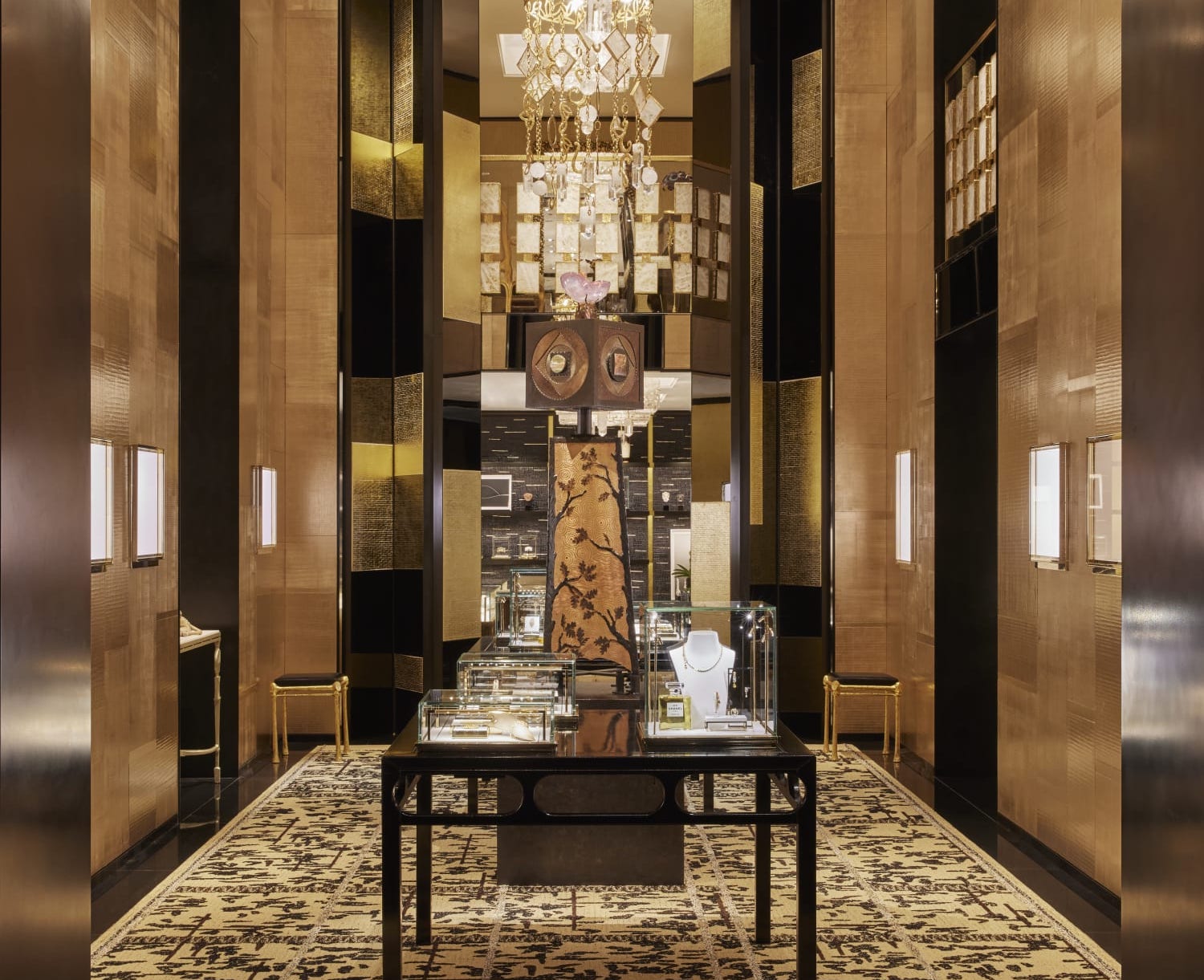
 Photo by Valérie Sadoun, courtesy of Drouot.
For Touitou, the pleasure lies in following an aesthetic instinct rather than adhering to traditional categories or hierarchies. Her approach also reflects Drouot’s broader ambition to welcome a wider audience into the world of collecting, bringing together accessible works and important historical objects in a space that remains open to all.
Touitou spoke with Whitewall about curatorial instinct, the evolving identity of the auction house, and why beauty and history should matter more than a price tag.
Inside Drouot’s Latest Selection


 CLAUDE LALANNE (1925–2019), Grand Éventail (Large Fan), Model originally designed circa 1980, Vase with a central flower-holder section, Gold-patinated bronze cast, Signed “Cl. LALANNE”, bearing the publisher’s stamp “ARTCURIAL” and numbered “17/350”., H. 17 × W. 34.5 × D. 6 cm, Auction on November 13, 2026, Auction House: MESENCHERES.FR, courtesy of Drouot.
WHITEWALL: You call the selection eclectic, poetic, and aesthetic. A Boudin panel sits beside a Helmut Newton nude on a Monte-Carlo diving tower… What conversation are these works having with each other?
JUDITH TOUITOU: As many as 80 auctioneers organize their sales at Drouot each year. For the exhibitions I curate, they propose a selection of pieces from their best upcoming auctions. The specialties represented are extremely diverse, from archaeology to modern art, from furniture to jewelry, from photography to sculpture.
The purpose of my work is specifically to create a dialogue between more than 100 pieces of art that would never be presented together, either in a museum or in a gallery. I think only Drouot organizes this very free-spirited approach to showing art. For me, the only way to do this work is to let my aesthetic instinct speak and freely organize what appears to me as a beautiful and fluid association between all the works.
Drouot’s Appeal and Accessibility
 A porcelain breast-bowl, known as jatte-téton, Sèvres Royal Porcelain Manufactory, 1787 *, The Dairy of Marie-Antoinette at Rambouillet, The Collection of Galerie Meyer, Auction on November 26, 2026, Auction house Coutau-Bégarie & Associés, The Dairy of Marie-Antoinette at Rambouillet, The Collection of Galerie Meyer, Auction on November 26, 2026, Auction house Coutau-Bégarie & Associés, photo by Valérie Sadoun, courtesy of Drouot.
WW: Several of the pieces are small and intimate, like François Pompon’s owl, Mai Trung Thu’s gouache on silk, and Boudin’s dedicated panel. Is this an argument for the collector’s eye over the trophy?
JT: Drouot is a place through which around 300,000 pieces are sold every year! Among them are some trophy pieces, of course, which we absolutely need to represent. For example, for this edition of “Œuvres Choisies,” we have two extremely rare porcelain pieces. One was ordered by Louis XVI for Marie-Antoinette to drink her milk from and was supposedly molded on her own breast. It’s an incredibly rare piece—only four were made—and it is breathtaking to look at. It appears as if it could be contemporary and even provocative, since it’s basically a tit in porcelain. The other is a rare imperial vase from China, dating to the 18th century. It was unheard of and is a total discovery.
But Drouot is not just about prestige pieces. A lot of accessible works of art are offered throughout the year, and I love to show that eclecticism, which means Drouot is not only speaking to an elite audience but is available to everyone. In this exhibition, I chose to show quite a lot of beautiful black-and-white photographs, including a Kammerman picture with a starting price of €500.
I also chose to shine a light on a wooden owl by Pompon, first of all because it is very rare to find wooden pieces by him, but also because, as small as it is, it feels to me like one of the most emotional art pieces I have ever seen, especially in our world, where there are so many threats to our fauna.
 Andy WARHOL (1928–1987), Goethe, 1982, Screenprint, signed lower left and numbered “1/100”.
H. 95 × W. 95 cm, Auction on November 20, 2026, Auction House: MIRABAUD MERCIER, courtesy of Drouot.
 MAI THU (1906–1980), Lecture (Reading), Gouache on silk mounted on Bristol board, signed lower left and stamped with the artist’s seal., Titled and dated 1968 in pencil on the reverse.
22.9 × 22.4 cm, Auction on December 11, 2026, Auction House: FERRI, courtesy of Drouot.
WW: The exhibition opens just days after Art Basel Paris. Is Drouot positioning itself as a counterpoint to the fair, or as its continuation for the same audience?
JT: Drouot doesn’t appear to me as a counterpoint to Art Basel Paris because it is a very unique Parisian institution that follows its own path and calendar. The timing of this exhibition was determined by the launch of its major fall sales, which will be held in the following weeks.
With more than 2,000 people visiting Hôtel Drouot every day, along with the great success of its very refined app, I think Drouot brings together the audience of the major fairs and a broader audience of art enthusiasts. To my knowledge, Drouot is the only company that operates this way and, thus, can create its own model and its own tempo.
Behind the Scenes of Hôtel Drouot
 Jean-Paul RIOPELLE (1923–2002), Untitled, 1950, Oil on canvas, signed and dated lower right, 60 × 70 cm, Auction on December 2, 2026, Auction House: CHRISTOPHE JORON-DEREM, courtesy of Drouot.
WW: Hôtel Drouot has recently undergone an extensive renovation of its entrance hall, alongside the opening of the café L’Adjugé. What changes when an auction house makes a more deliberate effort to welcome the public?
JT: Hôtel Drouot has undergone a massive renovation of its hallway to create a welcoming space open to everyone. This renovation, coupled with the creation of the café L’Adjugé and the free-minded exhibitions I am curating, shows the strong desire of the house to promote its physical space.
In a world that’s becoming more and more digital and sometimes a bit removed from culture in general, I find this move very smart. I strongly believe that being in contact with objects from our history and discovering aesthetic universes you are not familiar with can make someone feel happier and more anchored in reality. In a way, visiting “Œuvres Choisies” or Drouot in general is like visiting a museum or a gallery with a huge choice of objects for sale at every price, all year long. And the entrance is free!
 CHINA – YONGZHENG PERIOD (1723–1735), H. 48.2 cm, Estate of Madame Catherine Laudenbach, Auction on December 10 and 11, 2026, Auction House: BEAUSSANT LEFÈVRE & ASSOCIÉS, courtesy of Drouot, courtesy of Drouot.
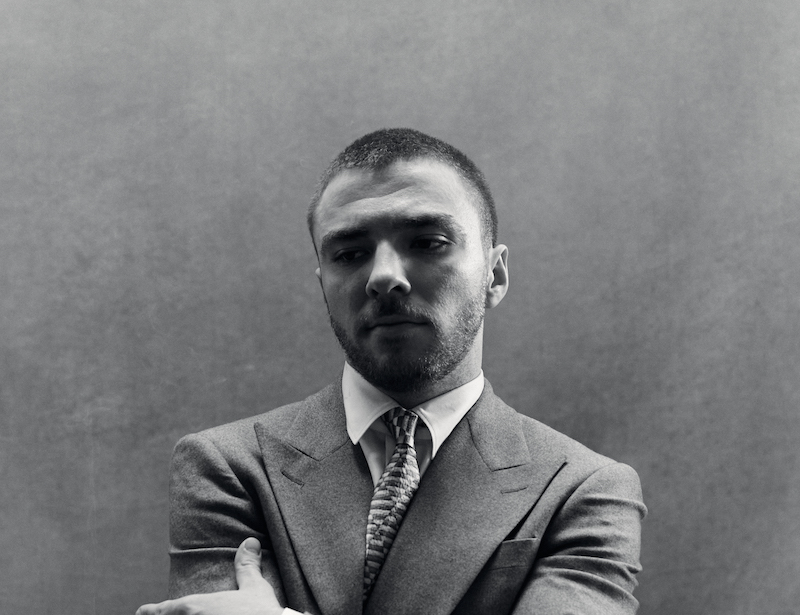
 Judith Touitou, photo by Valérie Sadoun, courtesy of Drouot.
WW: Drouot has maintained its distinctive rituals since 1852. With the renovated hall, the café L’Adjugé, and the online platform, what must never change, and what had to?
JT: What had to change was Drouot’s introduction into the digital world, and that has been achieved in a brilliant way. What must never change is the promotion and the attention devoted to the actual physical Hôtel Drouot, with its own atmosphere and the puzzling crowd waiting for the doors to open every day. It has its own metro station named after it, so it must stay there forever!
WW: Drouot Group sales reached €769 million in 2025, including a €32 million Picasso that achieved the highest hammer price in France that year. Does Paris now compete with London and New York on price, or on something else?
JT: I’m not at all a specialist in the art world, but my strong feeling is that Drouot’s seriousness—all pieces are thoroughly examined by experts, and many museums and the French State often preempt pieces—and its longtime dedication to selling all sorts of art will make it a very strong worldwide player in the art world in the future, with the help of its app.
Judith Touitou on the Future of Collecting
 A limestone bust of a woman, Palmyra, Roman period, 3rd Century, High. 53 cm – Larg. 41 cm, Collection G., Auction on December 11, 2026, Auction house Ferri, courtesy of Drouot.
 Attributed to Jean-François Van Peeterssen, Rudder head of Napoleon I’s imperial boat, Antwerp, circa 1810., High. 68 x Larg. 58 cm, Auction on November 26, 2026, Auction house Millon, courtesy of Drouot.
WW: Your career has been built around how culture is presented and perceived. What does an auction house need to learn from fashion and design to capture the next generation of collectors?
JT: I wish the next generation of collectors would be attracted by beauty or history rather than just by prices. For me, it is a great opportunity, for example, to display original letters by Voltaire, Baudelaire, or Dalí in this exhibition. I find them deeply moving, and they are so important for our history and also for our future that I would personally totally love to have them on my walls!
In the same spirit, displaying a coin from Vercingetorix, a historical figure who helped shape what would later become France, is another gesture toward our common past that I hope people will value. Holding this coin from the first century before Christ was also very intense for me in terms of emotions. Lastly, playing with the rules and being led by beauty alone is also something I hope people will imperceptibly appreciate.
 Photo by Valérie Sadoun, courtesy of Drouot.