

September marks the return of the international art season, as galleries reopen, institutions unveil new exhibitions, and artists across generations take over three of the world’s cultural capitals. From Paris to New York and London, this autumn’s programs reveal cities less as backdrops for art than as active participants in its ongoing conversations.
Paris: The City as Exhibition
 Christo, “The Pont-Neuf Wrapped, Paris, 1975-1985”; © Christo, photo by Wolfgang Volz, courtesy of Le Centre Pompidou.
Paris does not really return from summer; it changes temperature. By early September, the city begins to move differently. Galleries reopen, collectors return, new exhibitions appear almost simultaneously across the Left Bank, the Marais and the avenues around Matignon, while the autumn cultural calendar gradually takes over the city. With forty-two exhibitions opening across the galleries and institutions covered in this September agenda, there is no shortage of choice. The more interesting question is where to begin.
The answer, this season, may be to begin with the galleries. Paris is particularly compelling when its commercial spaces become laboratories for new ideas, and the September program makes a strong case for moving between generations, geographies and forms rather than following only the most familiar names.
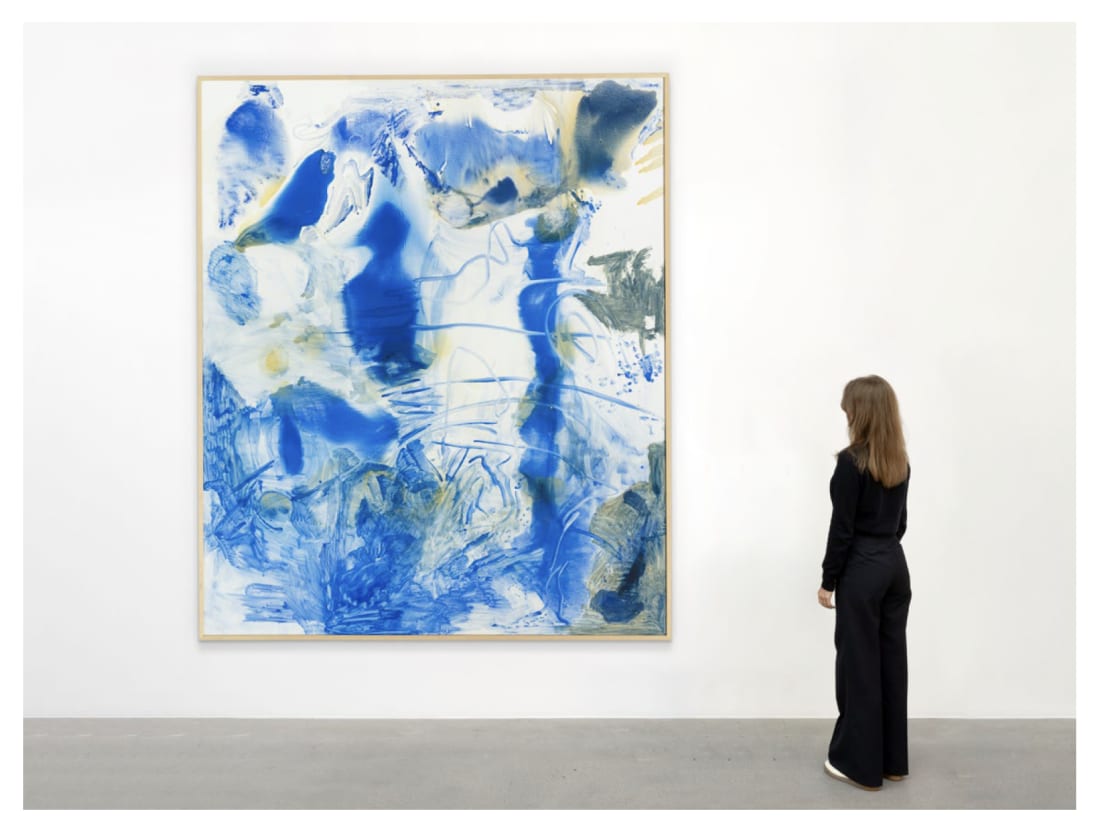
September 3 is already a remarkably concentrated opening day. Gagosian presents Jennifer Guidi’s “Waterfall,” while Galerie Allen offers Jason Dodge. At Mariane Ibrahim, Elsa-Louise Manceaux and Hilda Palafox meet in “Intersections,” bringing two distinct visual languages into dialogue. Mennour makes the most of the day across three spaces: David Hominal presents “Par coeur,” Amine Habki shows “Please mind the gap,” and Cameron Jamie explores “Immaterial Figures and Forces.” In a city where walking between galleries remains one of the great pleasures of the art season, this concentration feels almost like an invitation.
The following days shift the focus toward a younger and increasingly international generation. Sofia Salazar Rosales at Bremond Capela, Clio Sze To at Crèvecoeur and Ejoo Seo at Lo Brutto Stahl each offer a more intimate experience, while Mendes Wood DM brings Patricia Leite’s “Travessia” to Place des Vosges. Around the Marais, Perrotin presents Johan Creten’s “Les Chiens de Pavlov” alongside Emma Prempeh’s “The Domain of the Stranger “and the group exhibition “Restons Unis 2.” At Templon, Robin Kid’s “Permanent Display” and Anthony Caro’s “The Kenwood Series” create an intriguing dialogue between contemporary practice and modern sculptural history.
 Grand Palais Ephémère, © Wilmotte and associates.
Thaddaeus Ropac’s Marais spaces are another essential stop. Ali Banisadr’s “Talisman,” Nick Oberthaler’s “plains/portals” and Marcin Maciejowski’s “Around You” offer three distinct approaches to painting, image and abstraction within the same gallery ecosystem. Max Hetzler presents Sergey Kononov’s “Memoires,” while Nathalie Obadia brings together Clément Cogitore and Robert Kushner in exhibitions that extend from contemporary image-making to a more sensual relationship with color and nature.
The season closes the month by opening further conversations. The Centre Pompidou’s off-site program at the Panthéon presents “Vies minuscules,” while the Grand Palais brings together Cézanne and contemporary artists in “Cézanne et nous.” At La Galerie du 19M, “Métamorphoses” turns toward the savoir-faire of Maison Michel and the continuing relationship between fashion, craftsmanship and contemporary culture.
What makes Paris particularly strong this September is not simply the number of exhibitions, but the way they form a city-wide conversation. Painting, sculpture, photography, fashion, craft, performance and design move naturally between institutions and galleries. Paris remains one of the few places where a day spent looking at contemporary art can just as easily end with a meditation on a historic technique, an extraordinary object or an artist whose work has only just begun to enter the wider conversation. The city’s autumn program does not ask to be consumed all at once. It rewards wandering, returning and looking again. In September, Paris becomes less a backdrop for the art world than its exhibition itself.
New York: An Autumn of Many Americas
 Kasmin, New York. © Walton Ford; Joel Shapiro © 2026 Joel Shapiro and Ellen Phelan Foun-
dation / ARS, New York. Courtesy of Kasmin, New York. Photo © Roland
Halbe.
New York in September is always a test of attention. The city returns at full volume, galleries reopen, new exhibitions arrive almost simultaneously, and Chelsea, Tribeca, the Lower East Side, the Upper East Side and the institutions beyond them begin competing for the same limited hours. This September is particularly rich, with more than fifty openings across the galleries and museums covered in the city. Yet the strength of the season is not simply its scale. It is the remarkable diversity of ways in which artists are looking at America, its histories, its bodies, its landscapes and its increasingly complicated sense of itself.
The season begins quietly. Yvonne Jacquette’s “From the Air” at Karma offers an elevated view of the city and landscape, while Margot Bergman and Marcus Jahmal open at Anton Kern. At Anat Ebgi, Soumya Netrabile’s “Field Conditions” and Alannah Farrell’s “Solastalgia” introduce two artists whose practices engage differently with environment, memory and contemporary experience. In Tribeca, Christine Safa’s “Noces” at Bortolami adds another intimate register.
Walker Street quickly becomes one of the essential September routes. Bortolami presents Daniel Buren and Barbara Kasten alongside Yuan Yuan, while Mendes Wood DM shows Vojtech Kovarik’s In Between. At James Cohan, “Savdie / Soutine” brings Savdie into dialogue with Chaim Soutine, a reminder that New York’s galleries continue to use art history not simply as context but as material for new readings. Nearby, Nana Wolke’s “Halfway Out to Heaven” at Management adds a younger voice to the circuit.
Chelsea then becomes the centre of gravity. Casey Kaplan presents Matthew Ronay’s “cold meat, cake, and a variety of all the finest fruits in season ” and Johanna Unzueta’s “Gardens in Orbit,” while Gagosian brings together very different generations through Deana Lawson and Brice Marden. At Hauser & Wirth, Anna Maria Maiolino’s “ANNA—And the Infinite Line,” Lee Bul’s “The Anatomy of Every Setting Sun” and George Rouy’s “Reprise” make for one of the most substantial concentrations of contemporary work in the city.
There is also a strong interest in the constructed environment. Becky Suss presents “Night House” at Jack Shainman, while Rana Begum and Anna Park appear at Lehmann Maupin. Leidy Churchman’s “Space Remembers” and Gary Hume’s solo presentation at Matthew Marks extend the conversation around abstraction, space and perception. Together, these exhibitions demonstrate the extraordinary range that still exists within the supposedly familiar territory of New York painting.
 Installation Shot of “Iris van Herpen: Sculpting the Senses,” May 16–December 6, 2026, Brooklyn Museum, New York. Courtesy of the Brooklyn Museum. Photo by On White Wall Studio.
September’s institutional program is equally ambitious. El Museo del Barrio presents Teddy Sandoval and the Butch Gardens School of Art, while MoMA PS1 opens “Homeroom: Artists Against the Bomb,” bringing together artists whose work addresses conflict, political violence and resistance. The Studio Museum in Harlem presents “Geometries Geometries,” while the Brooklyn Museum opens “Free F’All,” focused on Michael Richards. These exhibitions expand the geography of the New York art season and, importantly, its historical perspective.
The middle of the month brings several exhibitions that should not be missed. Leonilson and Hiroshi Sugimoto open at Lisson Gallery, while Sarah Michelson presents “nowhere” at MoMA. Anthea Hamilton’s “Comfort Zones” at Salon 94 provides a more playful encounter with sculpture, installation and domestic space. At Friedman Benda, Wendell Castle’s “Living” returns attention to an artist whose work remains central to the expanded history of American furniture and sculpture.
The Met, meanwhile, becomes one of the most important destinations of the season. “Chasing Clouds” opens September 14, followed by Liu Wei’s “Speculation,” the latest Genesis Facade Commission. Later in the month, “Peripheries” by David Hartt expands the conversation around architecture, history and place. At the Guggenheim, Taryn Simon’s exhibition takes over the rotunda, while Jack Shainman presents Gordon Parks’s “Voices in the Mirror.” The Jewish Museum adds three distinct exhibitions, including “Sacred Splendor, Not a Circle but a Spiral” by Hannah Altman and “Sounding Shell” by Afruz Amighi.
The final weeks become increasingly charged. Jordan Wolfson at Gagosian, Bea Scaccia’s “Groomed curated by Francesco Bonami, and Arthur Jafa’s “I Am Tony” at the New Museum offer very different approaches to the contemporary image. At the Whitney, Coumba Samba’s “Stars and Stripes” inevitably enters into a broader conversation about American identity, while MoMA’s “Taking Back Our Space: Photographic Perspectives” looks at photography as a tool for reclaiming space and representation. The museum also presents “Full Disclosure: The Edge of Information Design” and Nilima Sheikh’s “Fractured Skies.”
Taken together, September in New York feels like a portrait of a city—and perhaps a country—in conversation with itself. There are exhibitions concerned with landscape and memory, abstraction and technology, identity and political violence, craft and architecture, historical figures and artists still emerging. What makes the season compelling is that these subjects rarely remain neatly separated. They overlap, contradict one another and occasionally collide.
That may be the most New York quality of the program. The city does not attempt to resolve its contradictions; it puts them next to each other and keeps moving. This autumn, that openness feels particularly valuable. From Chelsea to Harlem, Tribeca to the Upper East Side, the museums and galleries offer not one New York but many, and the most rewarding way through the season may be to let those different versions of the city speak to one another. September is not simply when New York’s art world comes back to life. It is when the city reminds us why its art scene remains so difficult—and so impossible—to ignore.
London: The Season Begins Again
 Bar Antoine, Royal Ascot, Four Seasons London.
September in London has always had a particular rhythm. After the quieter months of summer, the city seems to reassemble itself almost overnight, its galleries reopening, institutions unveiling new programmes and the streets around Mayfair, Fitzrovia, Soho, the East End and South Bank filling once again with collectors, artists, designers and the international crowd that arrives for the autumn art calendar. This year, however, the feeling is less one of a simple return than of a city reconsidering what an art season can be. Across the September program, historical practices sit alongside younger voices, craft finds new relevance, and the boundaries between painting, sculpture, design, performance and social practice continue to soften.
The best way to experience London now is not necessarily to follow a single geographical circuit, but to allow the city’s contrasts to become part of the experience. Start with Catherine Murphy’s “Recent Work” at Sadie Coles HQ, where the American artist’s precise, quietly uncanny paintings reward close attention. At Alison Jacques, Quentin James McCaffrey offers a more intimate encounter, while Massimo De Carlo presents Xue Ruozhe’s “One Table, Two Chairs,” a title that already suggests the relationship between the everyday and the constructed.
There is an appealing concentration of emerging practices in the early September gallery program. Pilar Corrias presents the second iteration of “Soft Spot,” while Thaddaeus Ropac’s “Like Music in the Blood” brings together Benjamin Orlow, Emil Sands, Galli, Hannah Quinlan and Rosie Hastings, Kira Freije, Suleman Aqeel Khilji, Tanoa Sasraku and Tiona Nekkia McClodden. Rather than offering a single generational or aesthetic position, the exhibition reflects the pluralism of a contemporary London scene increasingly connected to international conversations.
At White Cube Mason’s Yard, Emma Reyes offers another opportunity to discover or rediscover an important voice, while Pippy Houldsworth Gallery presents Liorah Tchiprout’s “The Family Katz.” Edel Assanti has Agata Bogacka’s “Interactionship,” followed later in the month by Anne Wehrley Bjork’s “Story Tellers.” These are the kinds of exhibitions that make September particularly interesting: smaller rooms, younger practices and artists whose careers are still being written.
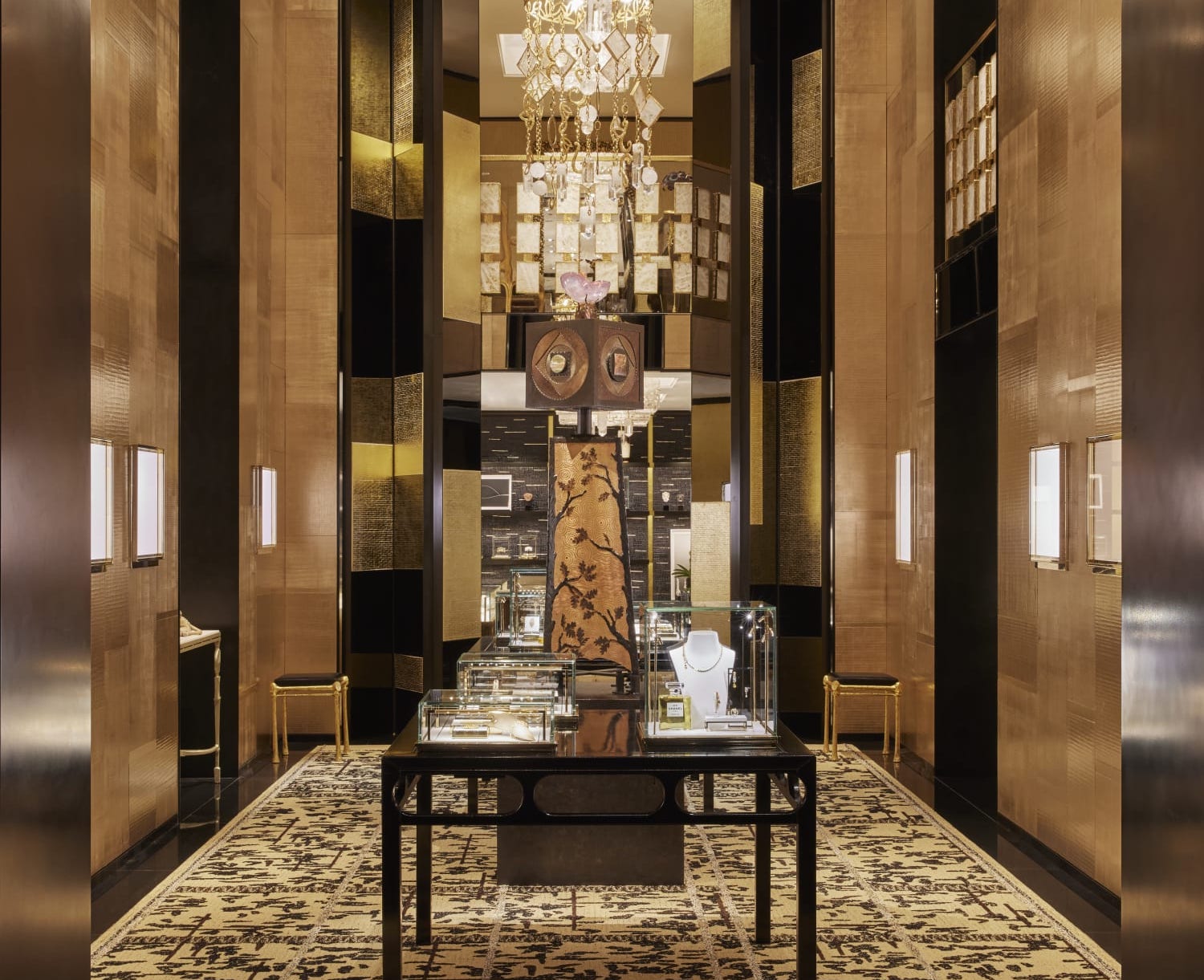
 Installation view of “Gabrielle Chanel. Fashion Manifesto,” courtesy of Chanel.
The institutional program broadens the conversation. The Courtauld introduces site-specific commissions by Ella Walker, before presenting Modern Painting from the Courtauld and Reuben Collections, bringing together figures including Picasso, Modigliani, Cézanne and Magritte. At the Hayward Gallery, Musquiqui Chihying’s “A Life of Navigation” offers a more contemporary reflection on movement, identity and geography. Regent’s Park becomes an exhibition space in its own right when Frieze Sculpture returns on September 16 with eleven international artists, while Somerset House turns toward craft with “Reviving Craft: Reflection of the Mind,” gathering more than sixty artists.
White Cube Bermondsey will be one of the essential destinations with Gabriel Orozco’s “Chronotopic,” curated by Briony Fer, while Walton Ford’s “An Orbed Drop of Light” at Max Hetzler and Martine Syms’s “Knot Eye” at Sadie Coles offer two very different approaches to the contemporary image. Louis Fratino’s “Prose,” opening at David Zwirner on September 18, is another exhibition to place high on the list, as is Nicole Eisenman’s work, appearing both in a free display at the Royal Academy and in a larger presentation at Sadie Coles later in the month.
London’s autumn also reveals how increasingly porous the relationship between art and design has become. The V&A’s “The Burberry Trench: Crafting an Icon” examines the history of one of fashion’s most recognizable objects, while Somerset House hosts Jenkin van Zyl’s “Enclosure,” bringing another, more experimental understanding of constructed worlds. At Lisson Gallery, Carmen Herrera and Ha Chong-Hyun offer two very different perspectives on abstraction, both reminding us that the supposedly historical language of painting continues to find new forms.
By the final week of September, the program becomes almost deliberately dense. Lawrence Abu Hamdan’s “Zifzafa” at the Barbican, Amar Kanwar at Serpentine North, Daichi Takagi’s “Suchness” at David Zwirner and Gagosian’s “This Is Still Not a Pipe: The Afterlife of Magritte” each propose different ways of thinking about image, language, politics and perception. Together, they make a convincing case for London as a city where the established and the experimental still meaningfully coexist.
The pleasure of London this September, ultimately, lies in that coexistence. There is no single story defining the season, and perhaps that is precisely its strength. The city feels less interested in declaring a dominant aesthetic than in allowing many different histories and futures to occupy the same cultural landscape. Between the galleries of Mayfair and Cork Street, the warehouses of East London, the institutions along the Thames and the parks that become temporary exhibition spaces, September offers something increasingly rare: the possibility of being surprised. The London art season begins again not with one grand statement, but with a city full of competing voices—and plenty worth listening to.