


Working across Venice, Paris, and London, Mehdi Dakhli moves fluidly between the worlds of contemporary art, design, and creative consultancy. A curator and art advisor turned designer, his practice explores the ambiguous territory where functional objects become sculptural works, informed by materiality, cultural memory, and an enduring fascination with form. His collaborations span disciplines, including work with Pritzker Prize-winning architect Francis Kéré, while his recent partnership with French design house Pinto brings his distinctive visual language into dialogue with the maison’s heritage and craftsmanship. Whitewall spoke with Mehdi Dakhli about the art of making, the importance of knowing when to stop, and the creative freedom found between disciplines.
Mehdi Dakhli Between Art and Design
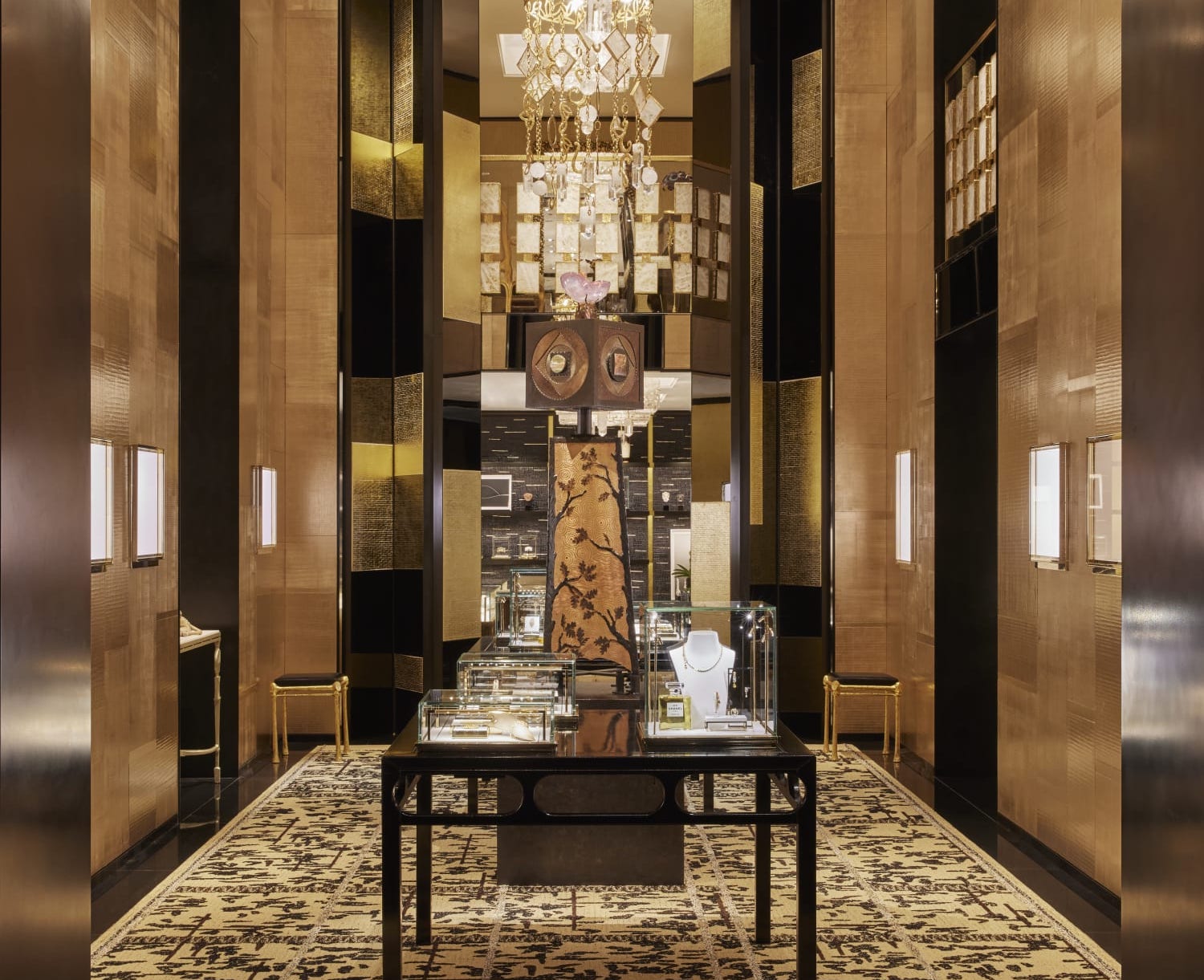
 Pinto x Mehdi Dakhli Showroom. © Jacques Pépion, courtesy of Pinto x Mehdi Dakhli.
WHITEWALL: Your work seems to begin with a fascination for form, particularly the tension between sculptural presence and the function of an object. How has your practice evolved around this relationship between art, design, and everyday life?
MEHDI DAKHLI: My relationship with design really began through contemporary art. Long before I started designing objects myself, I had already built a solid practice as a curator and art advisor, working closely with artists and developing projects around contemporary art.
I’ve always been particularly drawn to conceptual art, where the idea can be as important as the object itself. I think that has deeply influenced the way I approach design. I rarely begin with the question of function alone; I begin with an idea, a story or a reference, and the object becomes a way of giving it physical form.
Design initially gave me the freedom to explore an artistic practice without the pressure of calling myself an artist. In a way, it was my artistic coming out.
Over time, the boundary between art and design has become increasingly blurred, both in my own work and more broadly. I’m interested in objects that have a function but also a presence beyond that function – pieces that can be experienced almost as sculpture.
“I rarely begin with the question of function alone; I begin with an idea, a story or a reference,”
—Mehdi Dakhli
WW: Does the fact that an object is functional make it any less of an artwork? I don’t necessarily have an answer, and I like that ambiguity. My work increasingly exists somewhere in between.
MD: There is a strong sense of materiality in your work, where wood, texture, volume, and craftsmanship become almost as important as the final form itself. What draws you to certain materials, and how do they influence the way you create?
Craftsmanship and materiality are fundamental to my practice. I like to think of what I do as ‘artisanat d’art’ – where the hand, the material and the idea are all equally important.
I’m particularly drawn to materials that feel alive. Solid wood, for instance, never really stops evolving. It reacts to its environment, it ages, it develops a patina. I love the idea that an object continues to live and change long after it has been made.
I also really value the exchange with the artisans I work with. I love learning from their knowledge of a material – the way it behaves, its possibilities and its limitations. That understanding is incredibly valuable to me as a designer, and inevitably informs the way I think about making.
In that sense, I feel quite close to haute couture, where a strong creative vision can only fully exist through an exceptional understanding of material and an extraordinary level of craftsmanship. Azzedine Alaïa is someone I deeply admire, and one of those figures I only wish I could have had the opportunity to learn from.
There is something very special about seeing an idea move from a drawing into the hands of someone who has spent years mastering a craft.
Rewriting Cultural Memory
 Pinto x Mehdi Dakhli Showroom. © Jacques Pépion, courtesy of Pinto x Mehdi Dakhli.
 Pinto x Mehdi Dakhli Showroom. © Jacques Pépion, courtesy of Pinto x Mehdi Dakhli.
WW: Your objects often feel both contemporary and somehow familiar, as though they could belong to another time while remaining very much of the present. How important are memory, cultural references, and heritage in your creative process?
MD: Memory is fundamental to my work. Before becoming a designer, I spent years as a curator, and I was deeply affected by artists who use memory – personal, collective or cultural – as material for their work. That inevitably shaped the way I approach objects today.
I often begin with references that already carry a certain familiarity—architecture, history, cultural forms – but I’m not interested in reproducing them literally. I’m interested in what happens when you recontextualize those references and gradually turn them into your own visual language.
Interestingly, some people have described certain pieces of mine as having an almost fantastical quality, as if they could belong in a dystopian film. I like that reading because it creates an unexpected tension: the starting point may come from memory or the past, but the object can feel as though it belongs to an imagined future.
Heritage, for me, is not something static that needs to be preserved exactly as it was. It’s something we can question, transform and continue to write. For me, design is a way of rewriting cultural memory.
WW: You have developed a language that is quite restrained, yet the pieces possess a strong physical presence. How do you approach the balance between simplicity and character when designing an object?
MD: It’s interesting that you describe the work as restrained. I don’t necessarily think of it that way, because some of my pieces can actually be quite expressive, even almost fantastical. But I do believe in restraint when it comes to the design process.
I like an object to have a strong identity, but I don’t think that comes from adding more. It can come from a proportion, a silhouette, a tension in the volume – sometimes one gesture is enough.
Perhaps the restraint is not in the character of the object, but in knowing when to stop. I want the pieces to have presence, but I never want them to feel over-designed.
A New Chapter for Pinto with Mehdi Dakhli
 Pinto x Mehdi Dakhli Showroom. © Jacques Pépion. Courtesy of Pinto x Mehdi Dakhli.
WW: Turning specifically to Pinto, what initially interested you about the house and its approach to furniture, interiors, and craftsmanship? Was there a particular aspect of Pinto’s identity that you wanted to respond to?
MD: The collaboration actually came about very naturally. I met Fahad, visited the Pinto showroom, and very quickly he suggested that we do something together. From there, everything happened quite organically and surprisingly fast.
I’m quite selective when it comes to collaborations. I need to feel that there is a genuine understanding and a certain freedom in the relationship. Fahad is someone who listens, who is curious, and I think his background as an architect also gives him a particular sensitivity to form, proportion and the way objects inhabit a space.
I was also interested in the broader creative direction Pinto is taking and in the dialogue the house is building through collaborations with designers such as Stefano Pilati. For me, those choices say something about the cultural and creative positioning of a house, and about the company I want my own work to be in.
Pinto has an extraordinary heritage, but it is also writing a new chapter. I liked the idea of bringing my own language into that history without trying to reproduce what Pinto had done before. For me, respecting the identity of a house doesn’t mean imitating its past—it means finding a relevant way to contribute to its future.
“Having enough freedom to remain yourself, while allowing another perspective to make the work stronger,”
—Mehdi Dakhli
WW: A collaboration can sometimes become an exercise in simply placing two signatures side by side. How did you and Pinto approach this differently, and where did you feel there was a genuine creative dialogue between your respective worlds?
MD: I think collaboration can take many different forms. In this case, what I appreciated was that Pinto gave me the space and freedom to create something that remained very much within my own language, while bringing constructive feedback that helped me refine the pieces.
There was a creative dialogue around the design, of course, but also through Pinto’s experience and savoir-faire. I wasn’t asked to respond to a specific brief or to design something that looked recognizably “Pinto.” The process was much more organic than that.
The result still feels very identifiable as my work, but somehow it also sits naturally within the Pinto universe. There is a shared interest in strong forms, craftsmanship and references to the natural world, which made that connection quite instinctive.
For me, that’s also what makes a successful collaboration: having enough freedom to remain yourself, while allowing another perspective to make the work stronger.
The Making of Galka and Sting
 Pinto Showroom © Jacques Pépion. Courtesy of Pinto.
WW: Looking at the pieces created together, how did the process of working with Pinto and its savoir-faire influence your own approach? Did the collaboration lead you somewhere you might not have arrived at independently?
MD: I wouldn’t say the collaboration fundamentally changed my approach, and I don’t think a successful collaboration necessarily has to. I’m already very involved in every aspect of my work, from the design and comfort of a piece to its production, quality and the way it is ultimately presented.
With “Galka,” for example, I had designed two different approaches to the seating. One had a very subtle downward inclination, conceived to allow you to really settle into the sofa, stretch out and feel extremely comfortable. The other was a more traditional seating configuration. We ultimately chose the latter, partly because it made more sense from a commercial perspective, while preserving the sculptural identity of the piece.
With “Sting,” the exchange was different. It was more about the overall concept and creative conversations, as well as the selection of textiles, including fabrics developed through Pinto’s partnership with Nobilis.
More broadly, I think what’s interesting about Pinto today is that the house can act almost as an incubator for different creative talents. It provides a platform, extraordinary savoir-faire and a strong creative environment, while allowing each designer to retain their own language.
So rather than taking me somewhere I wouldn’t have arrived at independently, the collaboration gave me another context in which to develop and refine my ideas. The pieces are ultimately the result of that encounter between two creative worlds.


