



At Hauser & Wirth on Savile Row, a single evening brought into focus a way of working that extends beyond the occasion itself. Within a space shaped by art, Akris presented fashion as form—measured, exact, and inseparable from the material conditions that produce it. What emerged was not a presentation in the conventional sense, but a practice made visible: one in which clothing is understood as structure, and structure as a mode of thought.
Translating Geta Brătescu Through Akris
 Albert Kriemler Portrait. Courtesy of Akris.
 Courtesy of AKRIS and Hauser & Wirth.
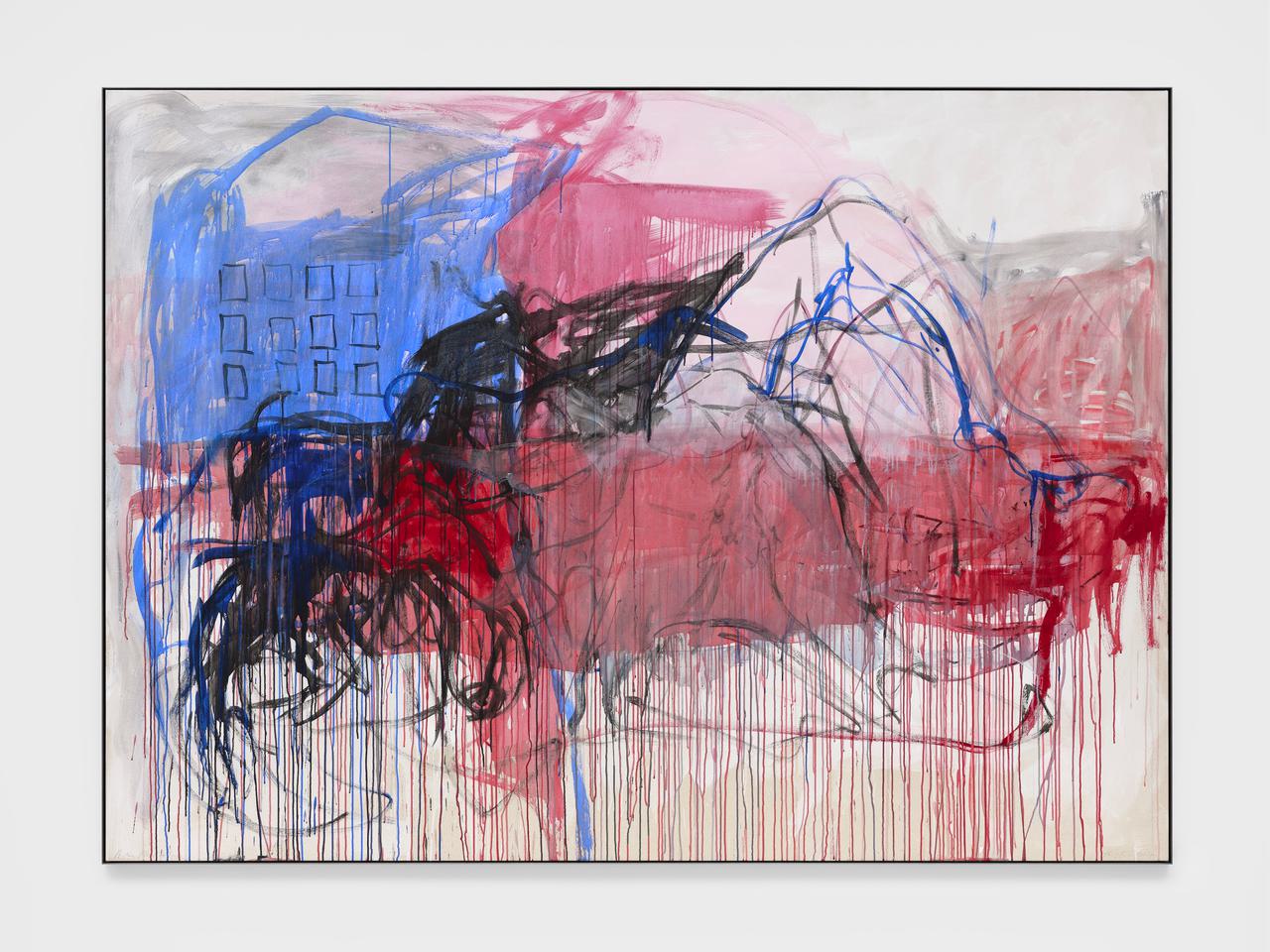
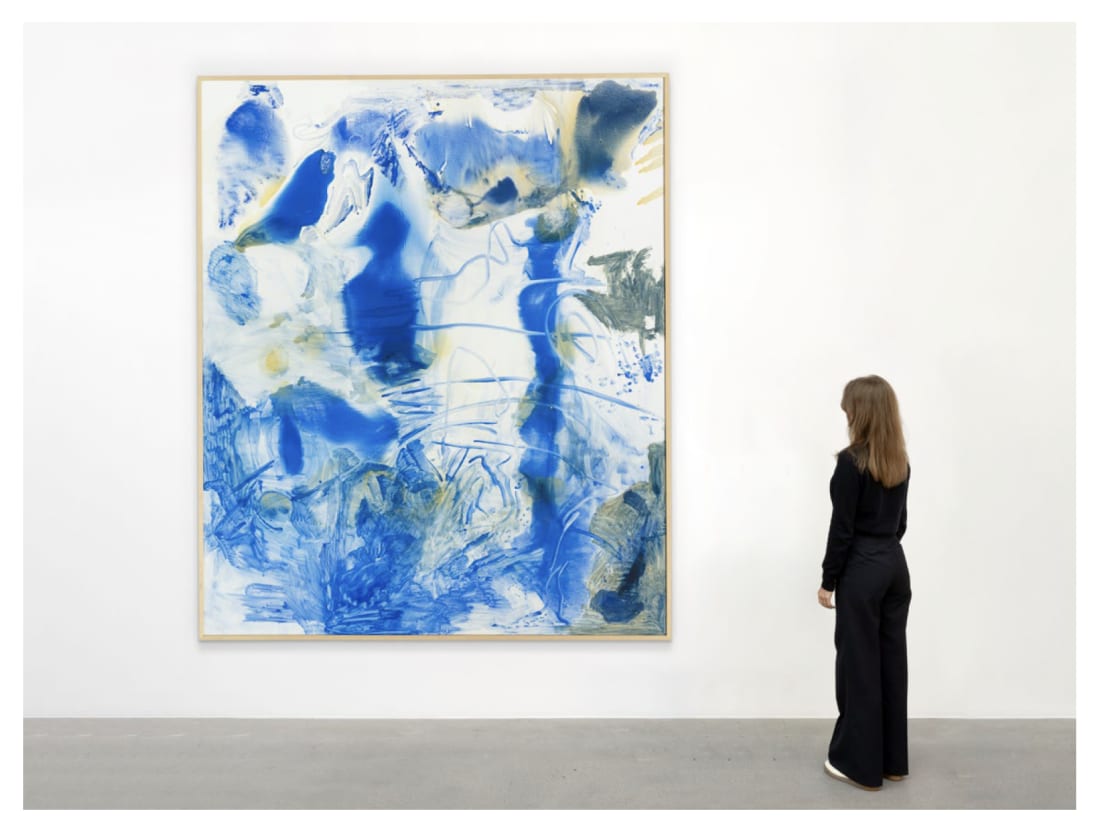
A selection of looks from the Spring/Summer 2019 collection, developed in dialogue with Geta Brătescu, was installed alongside her works. The proximity between collage and garment—paper beside fabric, line beside form—did not establish comparison, but continuity. Each operates through a shared discipline of reduction, movement, and control.
For Albert Kriemler, Creative Director of Akris, Brătescu’s work continues to resonate through a clarity of intent that resists time: “For me, her work is a powerful reminder that art can be a source of joy. I felt a strong connection to her process of creation. Geta said that art, not fame, is what enabled her to lead a happy life. There is a quiet wit in her worldview that informs her work. It makes you smile.”
“When I first visited Geta’s studio in Bucharest, she asked me if I would work with ‘her magnets’—a metaphor for power, but also for the potential magnetism between people, or quite the opposite, as the case may be. She then flashed her radiant smile and added, ‘Of course, I need to be in control.’ It was striking to see how much zest for life she still radiated at ninety: full of humor, mischief, and self-deprecation—qualities that are evident throughout her work.”
 Courtesy of AKRIS and Hauser & Wirth.
 Courtesy of AKRIS and Hauser & Wirth.
Her practice, extending across drawing, collage, textile, and film, is sustained by an insistence on autonomy—particularly the autonomy of female authorship. As he notes, “With Geta, it was particularly important to me to present the entire breadth of her artistic work in my selection. Her own self, being a woman—these are themes she continually returned to over more than six decades. ‘I can do this, I can express myself in so many mediums, I can create in any way I want.’ This idea—an affirmation of female creativity—has always been very important to Geta.”
Within Akris, this position is not translated as image, but carried into construction: “Staying true to her artistic intention, I translated this into the collection—for example, in the knitted poncho inspired by her deconstructed self-portrait, a Pop Art image. When the wearer moves, the mouth smiles, the eyes dance, or, as she called it, ‘the portrait of a woman who gets what she wants.’”
From Collage to Cloth
 Courtesy of AKRIS and Hauser & Wirth.
 Courtesy of AKRIS and Hauser & Wirth.
The screening of Akris – Fashion with a Heritage, directed by Reiner Holzemer, brought this way of working into sharper focus. Filmed over two years, the documentary follows the development of collections from fabric to final form, revealing an internal structure defined by continuity, precision, and collaboration: “What I think interested Reiner most in approaching us for the documentary is exactly this: that there’s more to fashion than just an image—an obsession with fabrics, pieces made to last—and above all, family, a sense of purpose, and incredible, passionate people.”
“For me, that’s what felt essential to convey through the film. It also speaks to how it’s still possible today to operate quietly, successfully, and independently out of Switzerland—something increasingly rare in a fashion industry dominated by conglomerates.”
The Material Intelligence of Akris
 Courtesy of AKRIS and Hauser & Wirth.
 Courtesy of AKRIS and Hauser & Wirth.
Founded in St. Gallen in 1922, Akris remains one of the few independent houses operating at a global scale while maintaining control over its processes and materials. Its development—from double-face fabrics to advanced textile techniques—continues to be guided by the same principles evident here: reduction, precision, and structural clarity.
Seen within the gallery, the relationship between artwork and garment becomes immediate: “It’s always special to see the pieces next to their counterparts. Especially in Geta’s case, the contrast becomes very clear: small collages next to a work you can actually wear. That proximity shifts the experience—from looking at an image to encountering something bodily and three-dimensional.”
In this shift—from image to object, from observation to embodiment—fashion moves beyond the logic of seasonality. What remains is continuity: a practice in which material, form, and thought hold.
 Courtesy of AKRIS and Hauser & Wirth.
 Courtesy of AKRIS and Hauser & Wirth.