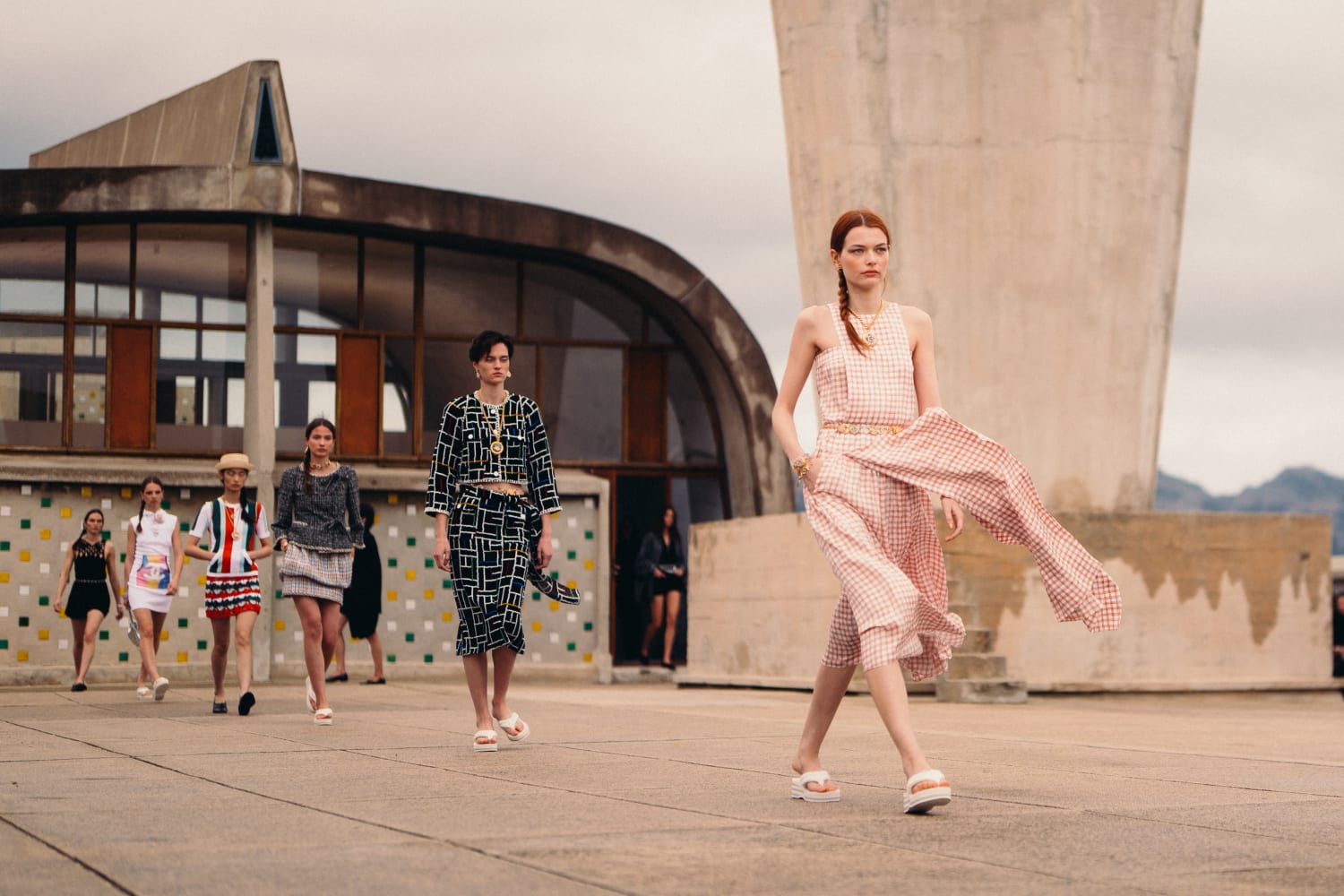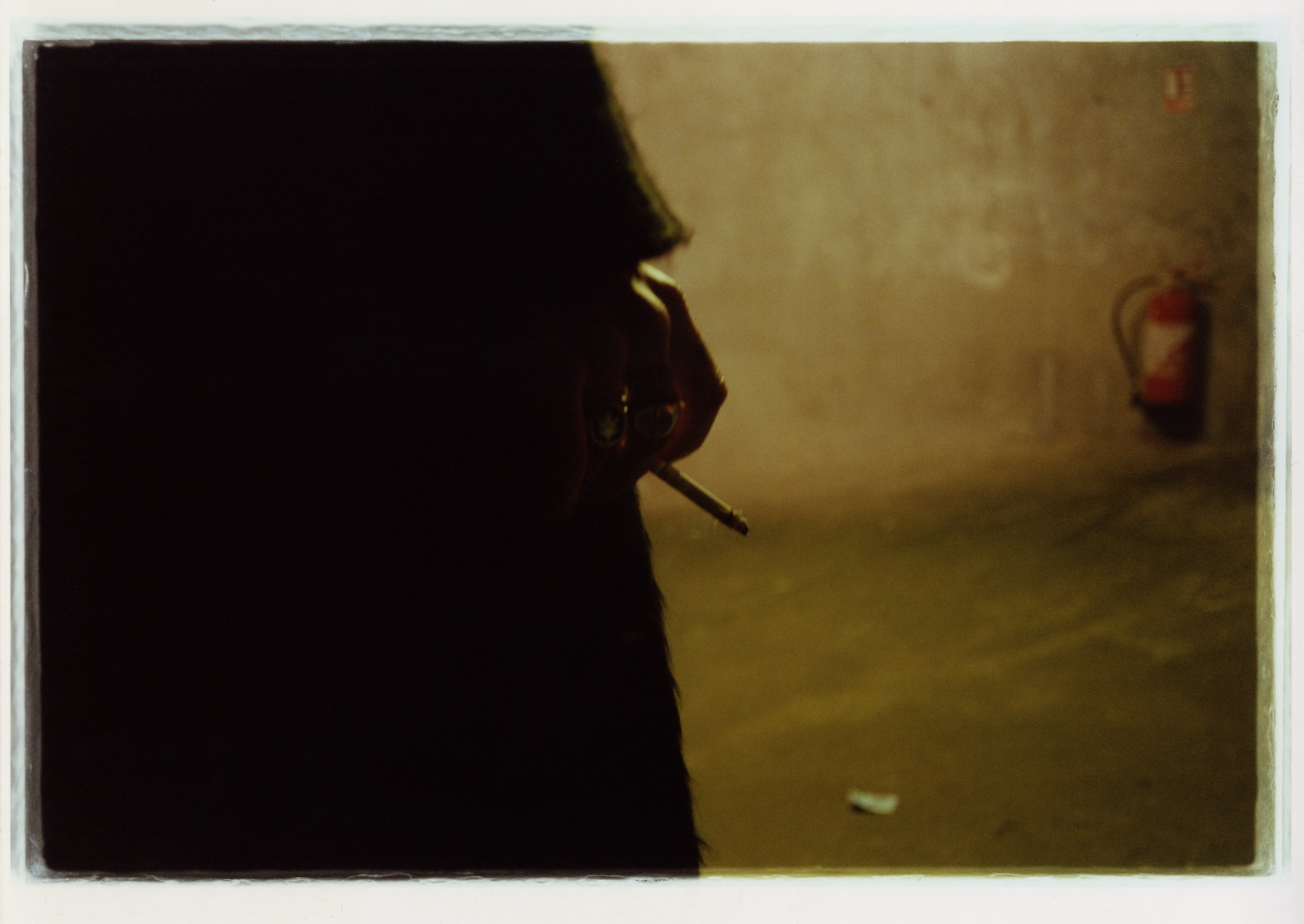


With an instinctive and cinematic eye, photographer Hugo Di Zazzo returns to frame Paris Fashion Week Fall/Winter 2026 as a living, breathing portrait of the city’s creative dynamism. Influenced by his cross-cultural roots and life in Paris, his photography is grounded in pure emotion, spontaneity, and a keen awareness of human presence. Di Zazzo distills each experience into layered, evocative images—where backstage thrill, heartfelt gestures, and the radiance of the city meet to form a nuanced portrait of the season.
Acne Studios


 Photo by Hugo Di Zazzo, courtesy of Acne Studios.
 Photo by Hugo Di Zazzo, courtesy of Acne Studios.
Jonny Johansson marked Acne Studios‘ 30th anniversary with a collection that declared, as one does at thirty: I know exactly who I am. The collection itself was an affirmation of the house’s irreverent signatures: a revival of the precise 1996 cut of jean that made Acne’s name; photographic elements referencing the bi-annual Acne Paper; large-format portraits of art school students, shot by Paul Kooiker, printed onto stiff pencil skirts and draped dresses. Cropped aviator jackets with skin-tight jodhpurs; Prince of Wales check jackets worn off one shoulder.
Akris
 Photo by Hugo Di Zazzo, courtesy of Akris.
On International Women’s Day, Albert Kriemler presented Akris Fall/Winter 2026 as a dialogue with Colombian textile artist Olga de Amaral. The collaboration began during a visit to her Bogotá studio in September 2025, where Kriemler stepped into what he described as a tactile chamber of woven light and texture. That encounter became the starting point for a tightly edited 53 look collection grounded in material exploration.
COMME des GARÇONS
 Photo by Hugo Di Zazzo, courtesy of COMME des GARÇONS.
 Photo by Hugo Di Zazzo, courtesy of COMME des GARÇONS.
At COMME des GARÇONS’s riveting presentation during Paris Fashion Week, silhouettes emerged like living sculptures—defiant, asymmetrical, and unbound by convention. Under the masterful direction of Rei Kawakubo, garments seemed to hover between construction and collapse, layering dense wool, lacquered surfaces, and unexpected voids.
Cecilie Bahnsen
 Photo by Hugo Di Zazzo, courtesy of Cecilie Bahnsen.
 Photo by Hugo Di Zazzo, courtesy of Cecilie Bahnsen.
In Paris, Cecilie Bahnsen softened structure into dreamlike volume, where quilted florals and sculptural tulle floated with quiet resolve. Black anchored the collection, while delicate textures caught the light—each look a study in contrast, balancing innocence and strength, fragility and intention, like a whispered rebellion in motion.
Courrèges
 Photo by Hugo Di Zazzo, courtesy of Courrèges.
 Photo by Hugo Di Zazzo, courtesy of Courrèges.
At Courrèges, Nicolas Di Felice distilled futurism into sharp, kinetic clarity—sleek vinyl, second-skin knits, and precise cutouts tracing the body’s rhythm. A palette of optic white and midnight black pulsed with restraint, as silhouettes suggested movement, intimacy, and a modernity both austere and quietly seductive.
Dior
 Photo by Hugo Di Zazzo, courtesy of Dior.
 Photo by Hugo Di Zazzo, courtesy of Dior.
Jonathan Anderson‘s second womenswear collection for Dior was the show that confirmed what his debut had suggested: that he has found genuinely productive common ground between his own sensibility and the codes of the French house. The concept was “seeing and being seen,” a contemporary reimagining of the promenade, in which, as the show notes put it, “a walk in the park becomes a performance.”
Enfants Riches Déprimés
 Photo by Hugo Di Zazzo, courtesy of Enfants Riches Déprimés.
 Photo by Hugo Di Zazzo, courtesy of Enfants Riches Déprimés.
At Enfants Riches Déprimés, Henri Alexander Levy conjured a raw, nocturnal elegance—precise tailoring, ink-dark leathers, and whispered decadence. Each look felt lived-in, nearly haunted, where fragility met defiance, and beauty emerged through ruin, like poetry etched in the margins of a restless, romantic underworld.
Issey Miyake
 Photo by Hugo Di Zazzo, courtesy of Issey Miyake.
 Photo by Hugo Di Zazzo, courtesy of Issey Miyake.
Satoshi Kondo titled his AW26 collection for Issey Miyake “Creating, Allowing,” a characteristically Japanese recognition of innate beauty, and the credo that the role of the designer is as much about relinquishing control as wielding it. The collection navigated that tension through pieces where the artist’s hand was inserted sparingly. Where most fashion aspires to the condition of art, Issey Miyake aspires to the condition of science. The results are consistently unlike anything else being made.
Junya Watanabe
 Photo by Hugo Di Zazzo, courtesy of Junya Watanabe.
 Photo by Hugo Di Zazzo, courtesy of Junya Watanabe.
At Paris Fashion Week, Junya Watanabe engineered garments with architectural precision—patchworked leathers, reconfigured tailoring, and unexpected volumes colliding in motion. Utility met abstraction, as garments unfolded like wearable constructions, balancing discipline and disruption in a collection that felt both methodical and instinctively alive.
Kiko Kostadinov
 Photo by Hugo Di Zazzo, courtesy of Kiko Kostadinov.
 Photo by Hugo Di Zazzo, courtesy of Kiko Kostadinov.
Kiko Kostadinov composed a tactile dialogue between structure and fluidity—technical fabrics softened by unexpected drape, utilitarian codes reimagined with edgy lyricism. Organic tones grounded the collection, while layered silhouettes suggested subtle shifts, opulent memories, and a remarkable tension between function, identity, and evolving contemporary dress.
Matières Fécales
 Photo by Hugo Di Zazzo, courtesy of Matières Fécales.
Hannah Rose Dalton and Steven Raj Bhaskaran titled their AW26 collection for Matières Fécales simply 1%, a direct reference to the world’s wealthiest percentile, and the most explicitly political statement of the season. The collection functioned as a visual allegory of the fracture between extreme privilege and the rest of the world: silhouettes evolved into something almost post-human, the figures of the elite rendered grotesque through their own excess.
Niccolò Pasqualetti
 Photo by Hugo Di Zazzo, courtesy of Niccolò Pasqualetti.
 Photo by Hugo Di Zazzo, courtesy of Niccolò Pasqualetti.
Niccolò Pasqualetti’s Fall/Winter 2026 collection in Paris played out like wearable architecture in a sleek choreography. Sculptural garments folded, twisted, and recombined archetypal wardrobe pieces into shifting forms. Metal accents wrapped the body like living jewelry, while leather and fabric blurred into fluid constructions, dissolving boundaries between clothing, object, and skin.
Noir Kei Ninomiya
 Photo by Hugo Di Zazzo, courtesy of Noir Kei Ninomiya.
 Photo by Hugo Di Zazzo, courtesy of Noir Kei Ninomiya.
At Noir Kei Ninomiya, Fall/Winter 2026 unfolded as a dark garden of engineered blooms, where garments grew outward in intricate constellations. Modular forms clung and expanded like living matter, oscillating between armor and ornament. Black became a language of depth—absorbing light, then releasing it in glimmers of precise, otherworldly craft.
Zadig & Voltaire
 Photo by Hugo Di Zazzo, courtesy of Zadig & Voltaire.
At Zadig & Voltaire, the collection drifted through Paris with a rebellious tenderness. Tailoring loosened into languid silhouettes, leather softened with wear, and metallic glints caught like fleeting thoughts. A sense of undone elegance prevailed—where rock-inflected ease met quiet romance, and every look carried the echo of a restless, poetic spirit.