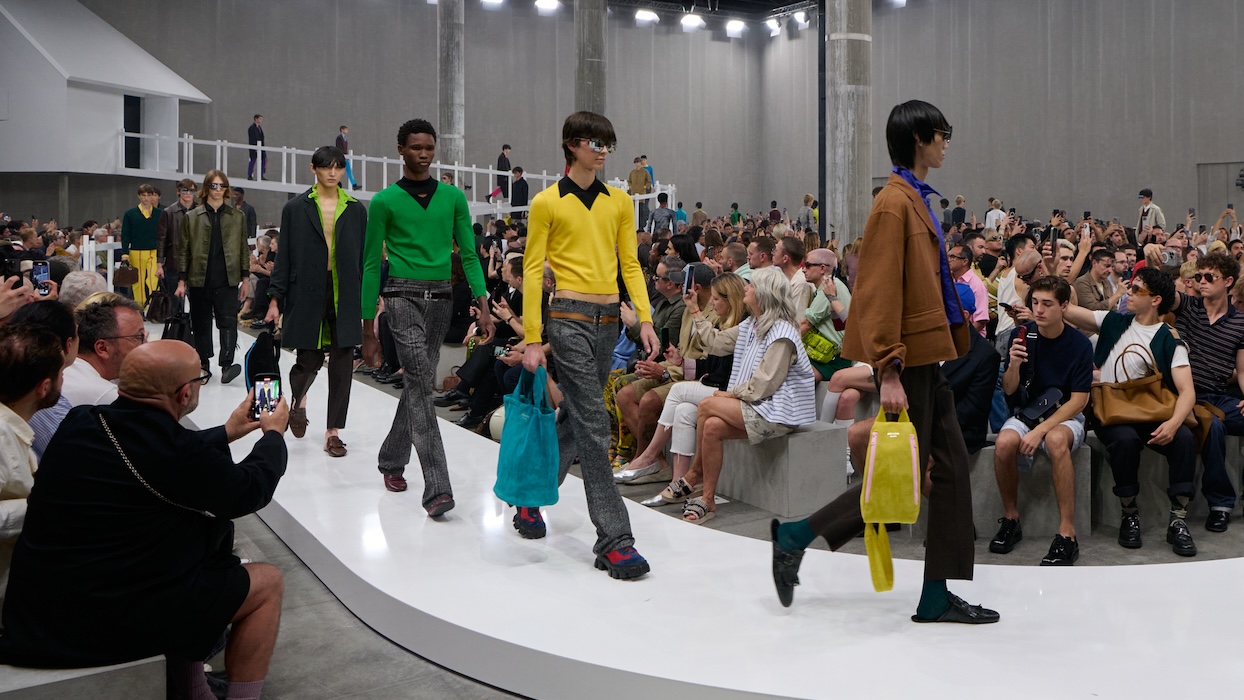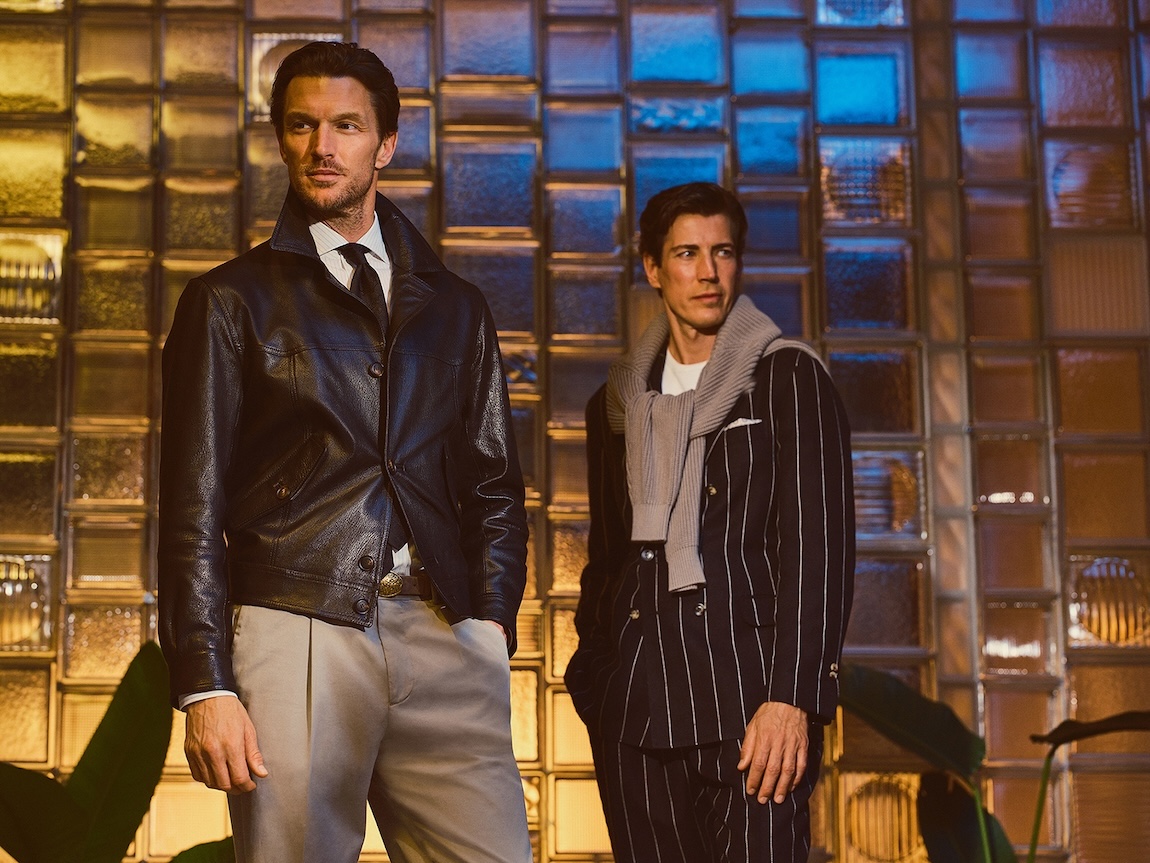
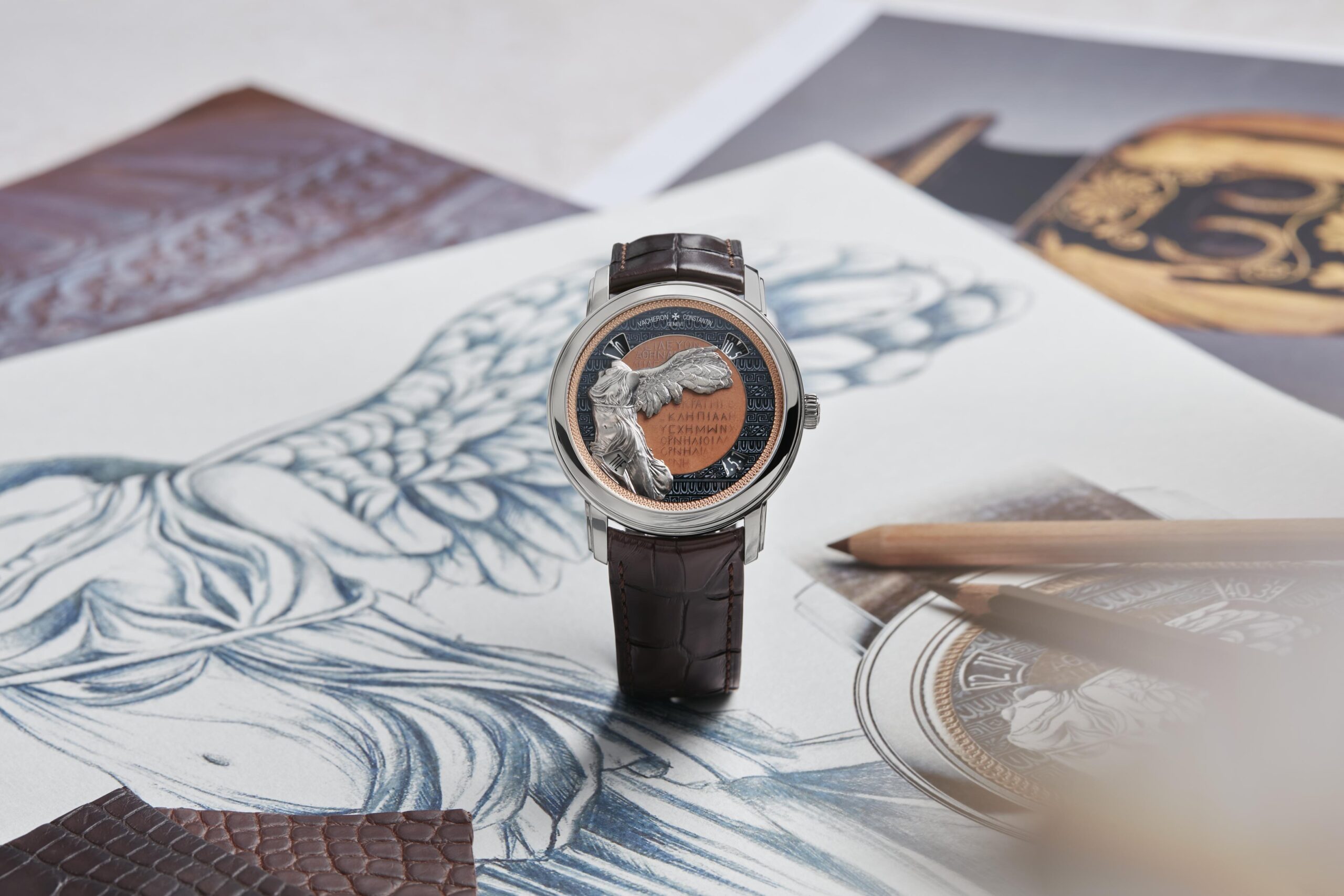



As Milan Fashion Week gives way to Paris, its final Spring/Summer 2027 collections leave us with a wardrobe that feels freer, stranger, and considerably more fun. Familiar codes are still there, but designers are pulling them apart: prints blur and fade, knits intentionally unravel, waistlines migrate, and shirts and skirts find themselves worn somewhere entirely new. Crochet, fringe, transparency, and saturated color bring a tactile energy to the season, while craft becomes something to expose and cherish rather than conceal.
At ETRO, bohemia is loosened and sun-bleached; Missoni lets its signature knits fray at the edges; and MM6 Maison Margiela questions why a shirt needs to be a shirt at all. J. Salinas puts Peruvian handcraft—and the women behind it—on the runway, while JW Anderson lets real people give familiar clothes new character. Elsewhere, Pucci turns historic pageantry psychedelic and René Caovilla makes footwear its own miniature light show. Milan may be over, but these are the collections keeping things interesting.
ETRO Halo
 Courtesy of ETRO.
 Courtesy of ETRO.
ETRO makes the case for bohemia again—but this time, it’s less precious, more undone, and practically bleached by the sun. For Spring/Summer 2027, familiar house codes soften under the imagined heat of a perfect summer day. Paisleys lose their sharpness, appearing blurred, sun-faded, or almost washed out by the sea, while a nude palette is cooled by blues and greens before burgundy, brown, and black take the collection into night.
Silhouettes skim the body and catch the breeze. Hemlines rise in front and trail behind; fringe sways; a windbreaker is tossed over a dress; paisley patches appear on jackets. Classic ballerina flats, gladiator sandals, and cone-heeled shoes bring a nostalgic twist, while bohemian bags collapse easily around the hand and body. Nothing feels fixed or overly composed, down to the carefree hair swept back from the face. Utility is present, but treated with ETRO’s instinct for decoration and ease. The result is a wardrobe built to move—light, sensual, and free without losing the richness of the house’s codes.
J. Salinas: The Hand Behind the Garment
 Courtesy of J. Salinas.
 Courtesy of J. Salinas.
Jorge Luis Salinas brought Peruvian craftswomen onto the Milan runway for “El Retablo,” placing the hands behind the collection firmly in view. Looking to his homeland—and particularly the Andes, where spirituality is woven into everyday life—Salinas considers how techniques preserved and passed between generations can move forward. “My aim is for each garment to serve as a bridge between past and present; for tradition to engage in dialogue with contemporary design and, above all, for the world to discover the cultural richness of our land,” says the designer.
The retablo, an Andean folk-art tradition of bringing miniature figures and scenes to life within small structures, becomes a starting point for equally intricate clothes. Organza and ultra-fine Pima cotton are layered into sheer dresses, capes, crochet, fringe, and fluid silhouettes, with handwork always visible. The palette bursts into yellow, pistachio, turquoise, sky blue, coral, carrot orange, lilac, and violet—like the Andes suddenly in full bloom. Crocheted clutches and bags continue the story, while leather footwear is punctuated with crochet inserts and floral details. Here, the human hand isn’t hidden behind the finished garment; it is the point.
Missoni: Unraveling the Familiar
 Courtesy of Missoni.
 Courtesy of Missoni.
Everyone’s favorite purveyor of wavy knits, Missoni has long made a case for dressing somewhere sunnier. For Spring/Summer 2027, however, its familiar chevrons, stripes, and geometrics begin to dissolve, fray, and unravel intentionally. Metallic threads and sequins bring evening sparkle into daylight, while the palette jumps between red, yellow, blue, black, gold, and silver, grounded by ecru, tobacco, dusty pink, grey, and brown.
There’s no single destination in mind. Fluid dresses, wide trousers, cardigans, and tops make up a wardrobe designed to work almost anywhere. Crumpled-brim hats offer a little shade, thick socks meet thin sandals, and bags come soft and oversized or small and easy. Cardigans are caught loosely by belts or left to slip from the shoulder, giving the styling an appealing sense of imperfection. Rather than dictating how the clothes should be worn, Missoni lets its oscillating forms shift with the wearer—a familiar language made looser, freer, and more personal.
MM6 Maison Margiela: Dressing Without Instructions
 Courtesy of MM6 Maison Margiela.
 Courtesy of MM6 Maison Margiela.
At MM6 Maison Margiela, getting dressed “wrong” is the new dress code. Spring/Summer 2027 takes the familiar architecture of a wardrobe and shifts everything out of place: shirts become skirts slung low on the hips, a V-neck becomes a bottom, and skirts climb upward into dresses as the waistline refuses to stay put. The garments aren’t entirely redesigned for their new positions—the wearer does the adapting. Extra panels make the experiment practical, but there’s something charmingly doll-like about it, recalling children dressing porcelain figures or disappearing into their parents’ clothes.
Menswear takes a more utilitarian route, though shirts, jackets, trousers, and tailored suits shift sideways from convention. Strategic snaps, shrunken proportions, and pliable fabrics make the repositioning possible, while starch, overdye, and paint disrupt familiar surfaces with texture. Glimpses of lace undergarments peek through unexpectedly, and button down shirts turned dresses hang from delicate straps. Even sunglasses become straight bars concealing the eyes. There’s no embarrassment in getting it “wrong”—at MM6, that’s precisely the point.
Pucci: Il Palio
 Courtesy of Pucci.
 Courtesy of Pucci.
From the pageantry of Siena to the pulse of a Parisian nightclub, Pucci knows how to make a print party. For Fall/Winter 2026, Camille Miceli looks to “Il Palio,” Siena’s centuries-old horse race, filtering its ceremony and visual spectacle through the psychedelic language of Emilio Pucci. House emblems collide with animal motifs, stars, sharp geometry, and abstracted landscapes in prints with names like Fiamme, Leocorno, Valdimontone, Fune, Onda, and Baiadera. The palette shifts into deeper, richer territory for winter without losing Pucci’s signature visual charge.
Cold-weather dressing gives those graphics new surfaces. Down-filled quilted jacquard builds volume around the body, archival tweeds return in reworked forms, and slinky jersey Lurex brings shine against the heavier textures. Trumpet trousers cut a distinctly ’70s line, while silhouettes drawn from historical dress echo the ceremony surrounding the Palio. It’s a meeting of pageantry and nightlife: fitted, fluid, quilted, and printed pieces made for the Pucci woman who would rather command the room than blend into it.
JW Anderson: In Good Company
 Courtesy of JW Anderson.
For Spring/Summer 2027, Jonathan Anderson puts the people around him at the center of JW Anderson. Friends and collaborators—from art collectors and ceramicists to actors, models, and academics—replace traditional casting in the lookbook, giving the clothes an immediate sense of real life. Familiar wardrobe pieces are reconsidered through material and texture: trousers and twisted jeans arrive in unexpected fabrics, while wool is spun into green sweaters scattered with whimsical wildflowers and ferns. Nature runs through the collection without losing Anderson’s particular sense of humor, right down to the Squirrel clutch and crochet details.
Workwear becomes a unifying thread, softened in pale pink, green, and blue. Perforated leather is cut into circles, crisp pleats are layered into skirts, and a silk dress drapes low around the hips. Jeans are reworked into a skirt while sweaters see window motifs. Oversized bags appear throughout, bringing utility to almost every look. Familiar and functional, these are clothes made more interesting by the people wearing them.
Rene Caovilla: A Luminous Show
 Courtesy of Rene Caovilla.
 Courtesy of Rene Caovilla.
From Cannes to the next red carpet, Rene Caovilla’s crystal-covered heels are rarely far from the flashbulbs. This season, the house evolves its Chandelier sandal, set on a 105mm stiletto heel and wrapped in silk satin. Hand-embroidered with 170 crystal drop rondelles, it comes in two iterations: multifaceted crystals or transparent crystals. Violet captures the light particularly well, while fuchsia, pale pink, ivory, seafoam green, fondant, and cerulean expand the palette. Classic nude iterations offer a quieter, more ethereal take.
The name comes from the famed luminaries of Venice, and their play with light translates directly to the shoe. Each pair requires more than 200 steps and two days of work, with suspended crystals that move, catch, and scatter light around the foot. Part shoe, part jewelry, and part miniature light show, the Chandelier seems destined for another red carpet. The only question is who will wear it next.