
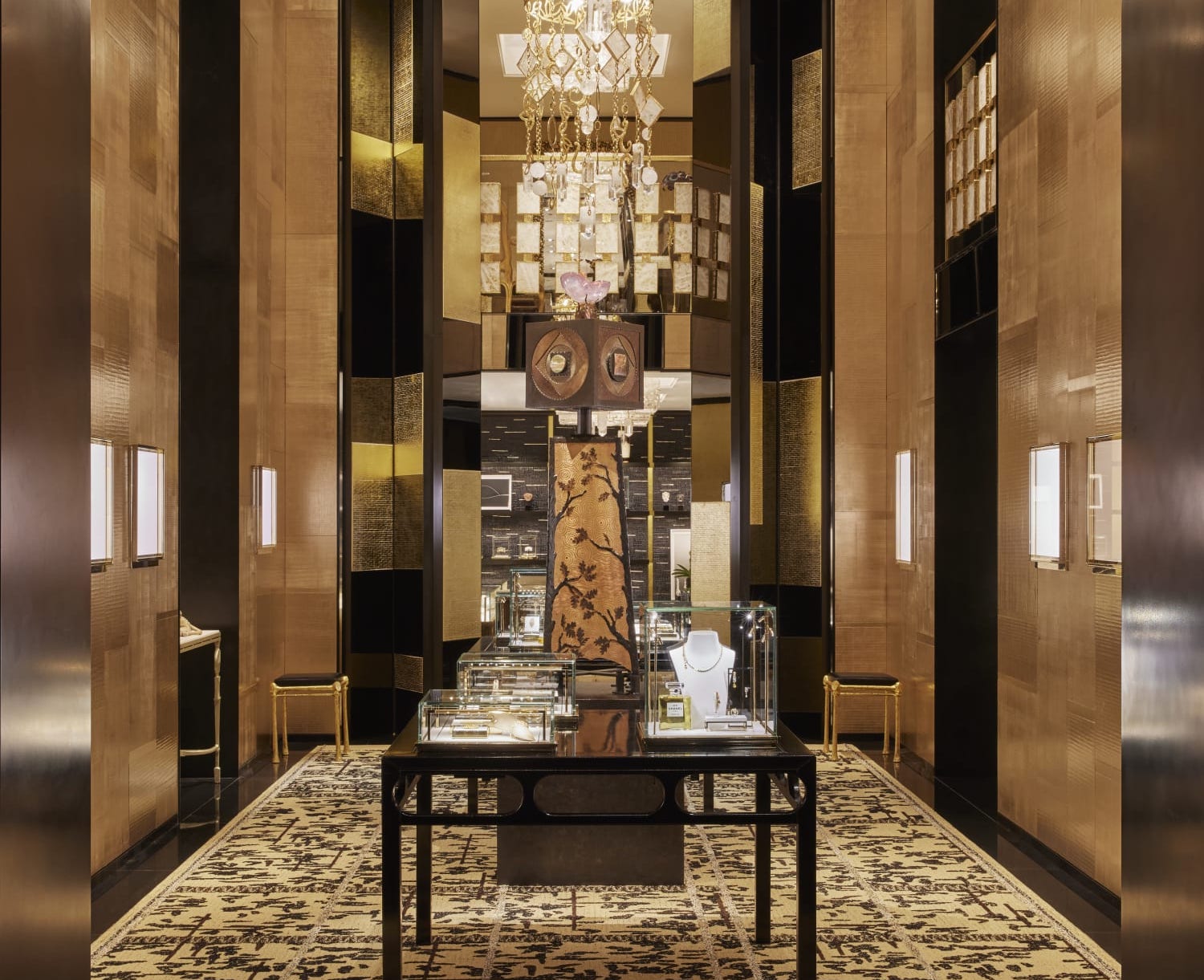


As Paris shifted from night into morning, Anthony Vaccarello staged Saint Laurent’s Winter 2026 men’s show in a moment suspended between darkness and daylight. The setting—washed in pale, early light—felt less like a theatrical spectacle than a lived-in Parisian interior, a place where memory lingers and the night’s emotions remain palpable. It was a collection rooted not in fantasy but in reality: the private hour after desire, when the world must be reentered.
Vaccarello’s starting point was Giovanni’s Room, James Baldwin’s 1956 novel that challenged postwar ideals of masculinity through intimacy, longing, and emotional exposure. In Baldwin’s Paris, dawn becomes a reckoning—an exchange between desire and responsibility. That tension shaped the entire show, which considered masculinity not as performance, but as something quietly negotiated in private.
The Space Between Night and Morning
 Saint Laurent Winter 2026 Menswear.
The show unfolded in a space steeped in intimacy and memory, where the reveal of light did as much storytelling as the clothes themselves. Anthony Vaccarello returned to a classic Saint Laurent idea—the morning after the night before—but rendered it with restraint. This was not nostalgia, but reflection: what remains on the body after love, after vulnerability, after time has passed.
That sense of liminality extended to the pacing of the show and the atmosphere in the room. Guests sat in near-silence, allowing the clothes to speak through texture, proportion, and movement. The experience felt almost confessional, underscoring Vaccarello’s ongoing interrogation of what maleness can mean at Saint Laurent today.
A Silhouette of Fragility and Strength from Anthony Vaccarello
 Saint Laurent Winter 2026 Menswear.
The collection proposed a lean, sinuous silhouette—elongated and precise—balancing strength with fragility. Jackets cut close to the body featured sharp, assertive shoulders that suggested protection rather than dominance. Beneath them, fabrics appeared softened, even crumpled, as if shaped by wear and memory. It was clothing that acknowledged the passage of time: what has been worn, loved, and lived in.
Anthony Vaccarello played with concealment and reveal throughout. Shirts were unbuttoned just enough to imply intimacy without spectacle; trousers sat low and fluid, moving with the body rather than constraining it. Erotic tension was present but never explicit—“eroticised without being exhibitionist,” as the collection notes suggested—allowing desire to exist quietly, on the wearer’s terms.
Saint Laurent’s iconic smoking emerged as a stabilizing force, almost armor-like in its authority. Paired with tall, grounding boots, the look felt anchored, resolute, and ready to face the outside world. “The ritual of dressing becomes a way of reclaiming oneself,” Anthony Vaccarello implied—moving from the nakedness of emotion back into public life.
Black, Reconsidered at Saint Laurent
 Saint Laurent Winter 2026 Menswear.
Color was distilled to its most essential form. Vaccarello chose black—perhaps the most Saint Laurent of all hues—for its duality. Here, black signified both classicism and rebellion, concealment and clarity. In the shifting dawn light, it absorbed and reflected emotion, revealing subtle differences in fabric and finish: matte wools against faintly lustrous surfaces, rigid tailoring set beside supple layers.
Textures carried much of the narrative. Softened leathers, fine wool suiting, and fluid shirting worked together to suggest tactility and touch. Each look felt considered, intimate, and deeply personal, as if assembled in private before stepping back into the world.
The front row mirrored the collection’s restrained intensity, drawing a mix of longtime friends of the house, artists, and cultural figures closely associated with Saint Laurent’s universe. Their presence reinforced the sense that this was not a spectacle for mass consumption, but a conversation—shared among those attuned to nuance.
With Winter 2026, Anthony Vaccarello continued his thoughtful reshaping of Saint Laurent menswear, proposing a masculinity that is introspective, emotional, and unapologetically personal. In the quiet promise of a Paris morning, he reminded us that dressing is not merely about appearance, but about survival—how we gather ourselves after the night and step, once more, into the light.